Starting with research
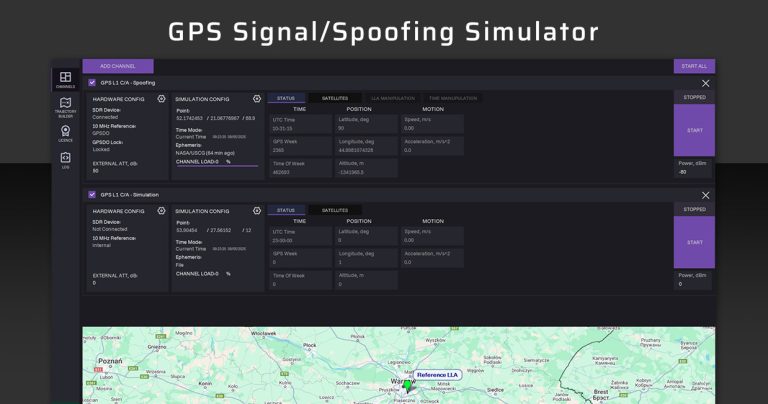
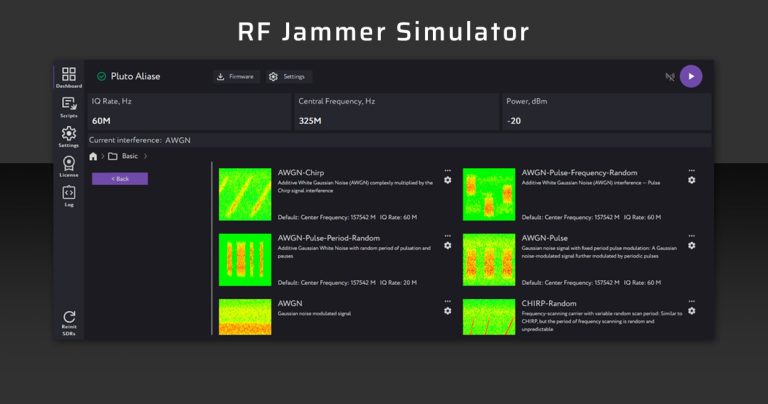
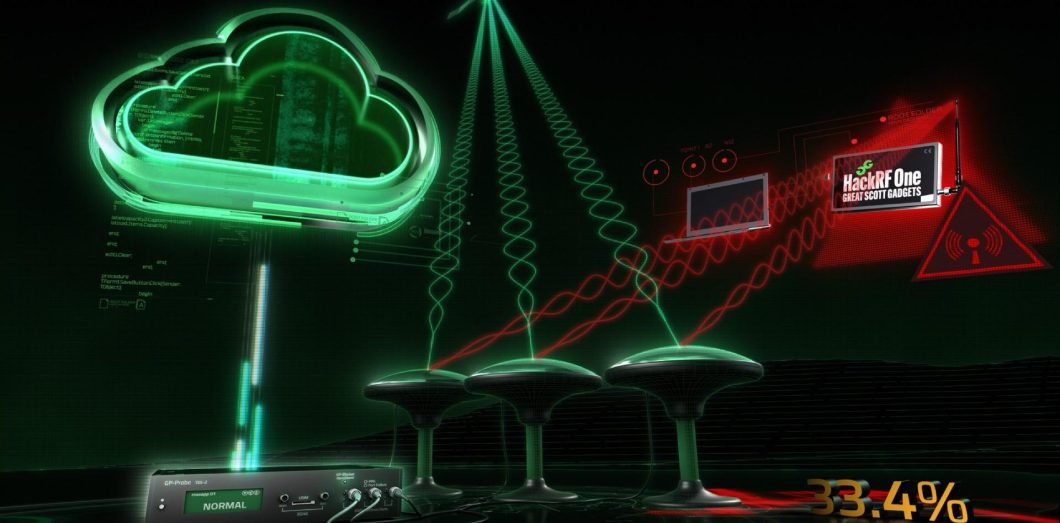
We started with research. We studied the scientific literature on GNSS spoofing, built our own GPS spoofer and generated different types of attacks to see how real receivers respond.
Two conclusions set our direction. First, coherent spoofing is the most dangerous attack. At its onset the counterfeit signals are synchronised with the genuine ones in code delay, Doppler frequency and navigation data, so precisely that the receiver’s tracking loops never lose lock. Any civil GNSS receiver is vulnerable to it, and once the signals are captured the attacker can gradually drag the position and time solution away.
At the receiver level such signals are indistinguishable from real ones. What gives them away is their spatial signature: genuine signals arrive from satellites spread across the sky, while counterfeit ones come from one or a few terrestrial transmitters. Measuring this requires several spatially separated antennas.
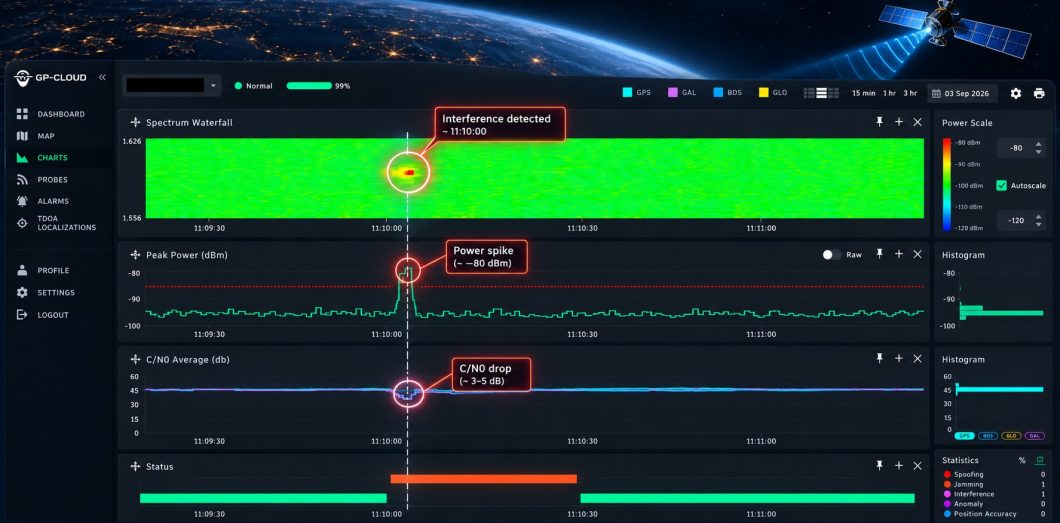
Second, detection has to be fast. Once a receiver has locked onto counterfeit signals, its time and position are already compromised, so the alarm must come before the capture is complete.
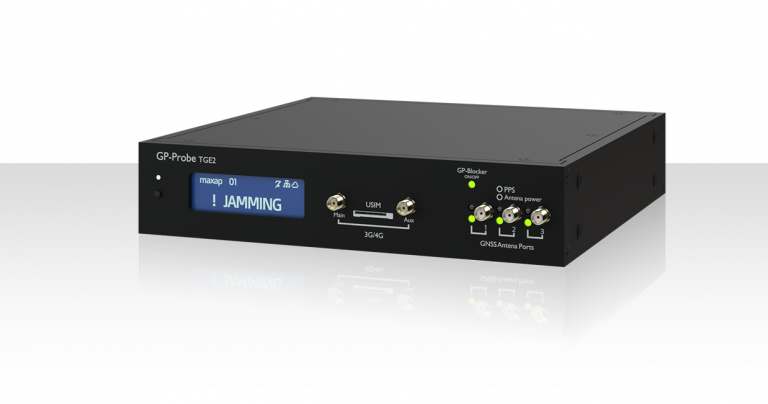
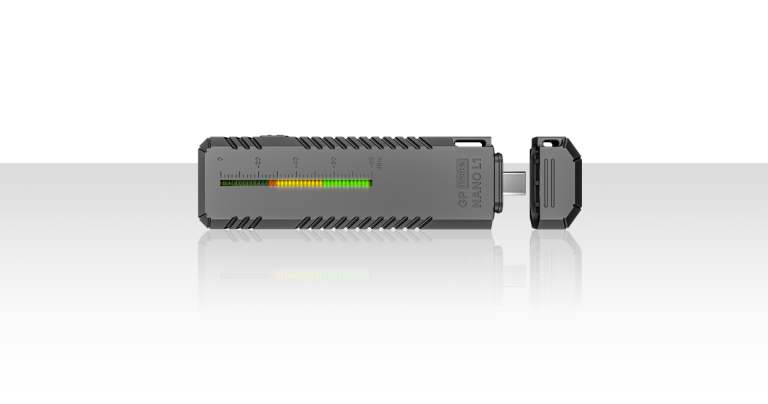
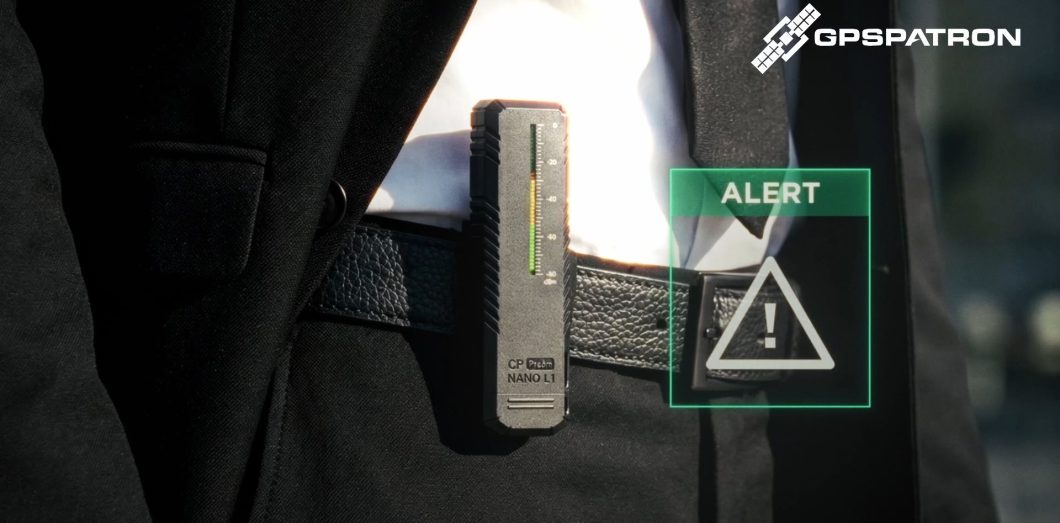
Only then did we build the first prototypes of our monitoring solution, completed in October. From the first experiments we recorded every attack and interference event into an internal dataset.