

GNSS interference is no longer a narrow technical issue limited to military or laboratory environments. It now affects aviation, maritime operations, telecom synchronization, critical infrastructure, autonomous systems, public safety, and industrial operations. As jamming, spoofing, and unintended RF interference become more frequent, organizations need more than a single detector. They need a complete operational framework for detection, classification, localization, logging, analysis, testing, and response.
GPSPATRON has built exactly that: a GNSS defense ecosystem designed to help operators detect interference in real time, understand what is happening, investigate incidents in depth, protect connected systems, and test resilience under controlled conditions. Our portfolio includes field and fixed detectors, cloud analytics, accessories for deployment and protection, and simulation tools for spoofing and jamming vulnerability testing.
Why GNSS Interference Monitoring Matters
GNSS has become foundational for positioning, navigation, and precise time synchronization. That means interference does not only affect receivers trying to determine location. It also affects systems that depend on precise timing, coordination, control logic, logging, and automation.
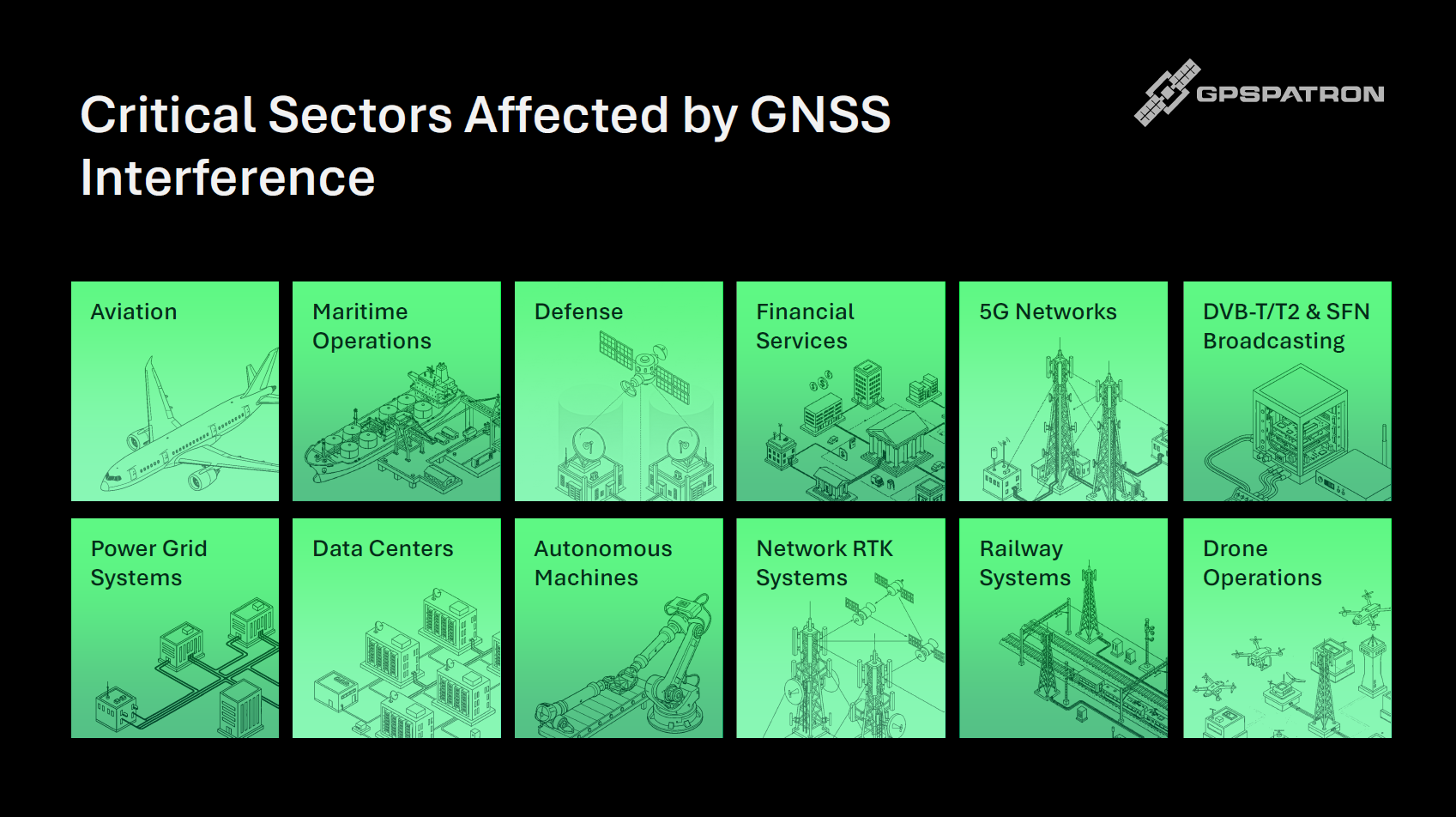
GPSPATRON focuses on sectors where GNSS disruption creates operational risk, including aviation, maritime operations, defense, financial services, 5G networks, data centers, power grid systems, RTK infrastructure, railway systems, broadcasting networks, autonomous machines, and drone operations.
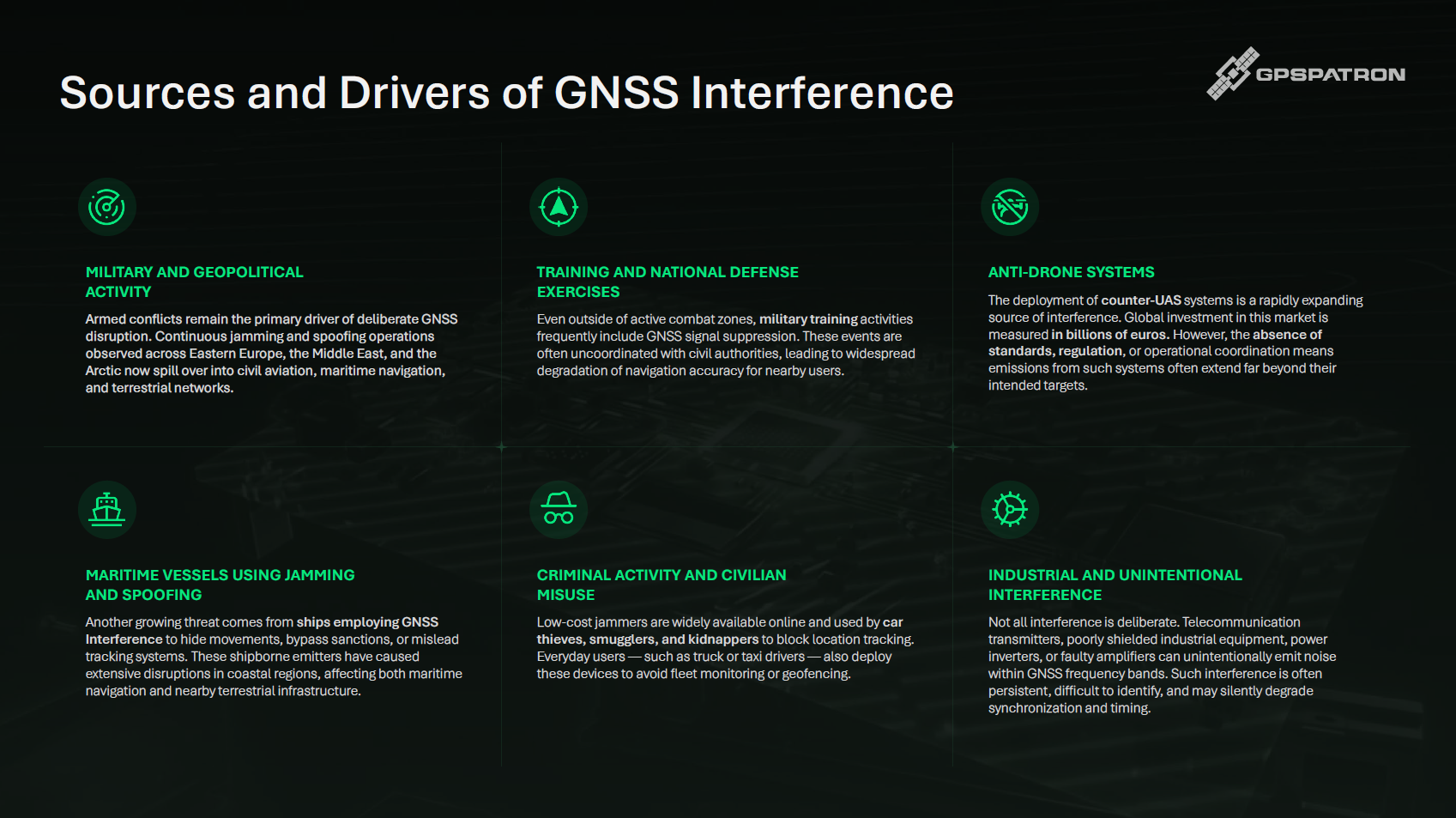
The current interference landscape is shaped by a mix of deliberate and accidental sources. Military and geopolitical activity continues to drive large-scale disruption. Maritime vessels use GNSS manipulation to obscure routes or evade tracking. Counter-UAS systems are becoming a major new source of emissions. Low-cost civilian jammers remain widely available. Industrial equipment and poorly controlled RF environments can also create persistent unintended interference.
The GPSPATRON Approach: a Complete GNSS Defense Ecosystem
GPSPATRON provides an integrated platform for:
- DETECTION
- CLASSIFICATION
- LOCALIZATION
- LOGGING
- POST-EVENT ANALYSIS
- SIMULATION
- PROTECTION
- INTEGRATION
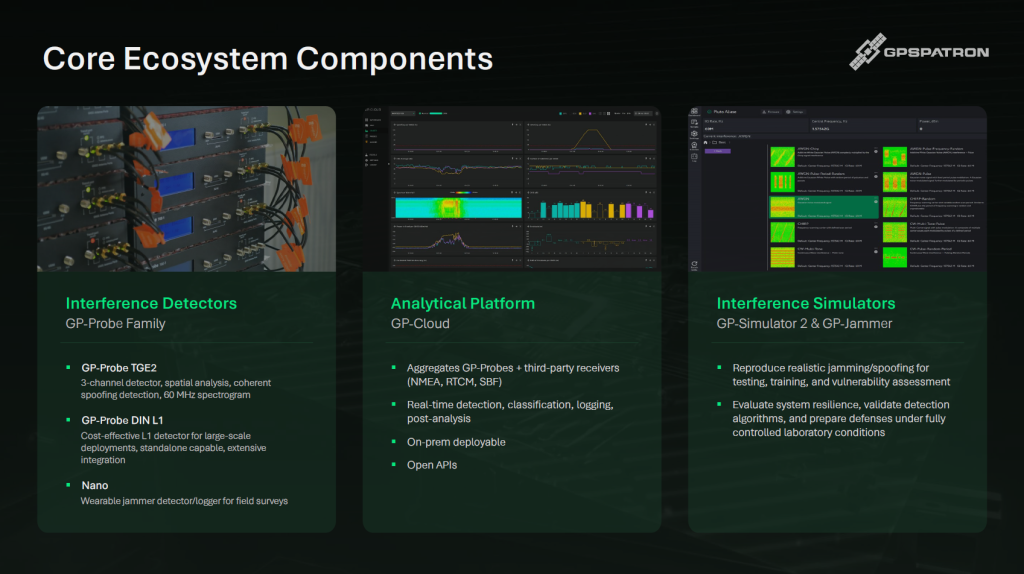
The ecosystem combines three layers:
- GNSS interference detectors
The GP-Probe family includes fixed, rack-mounted, DIN-rail, and portable devices for different deployment models and budgets. - Analytical platform
GP-Cloud receives, processes, classifies, stores, and visualizes GNSS and RF data in real time. It also supports integration with third-party GNSS receivers and external systems via API and event interfaces. - Simulation and resilience testing tools
GP-Simulator and GP-Jammer allow engineers, researchers, and security teams to reproduce spoofing and jamming scenarios in controlled environments for development, validation, and training .
This architecture gives operators both strategic visibility and practical response capability. It can be used as a centralized monitoring system, as a distributed detection network, as a lab testing toolkit, or as a combination of all three.
Core Functions of the GPSPATRON Products
Real-Time GNSS Jamming and Spoofing Detection
The system continuously monitors GNSS signals and detects jamming and spoofing in real time with sub-second latency. By combining RF spectrum measurements with GNSS signal analysis, it reliably identifies both high-power interference and low-power attacks, providing immediate visibility into affected constellations and operational impact.
Detection of Coherent GNSS Spoofing
The system detects advanced, intentional coherent GNSS spoofing scenarios using spatial signal analysis enabled by the three-channel GP-Probe TGE2. This approach allows reliable identification of well-crafted spoofing attacks even when spoofing signal power is comparable to authentic satellite signals—scenarios that remain undetectable for single-antenna receivers.
Extensive Integration Capabilities
The system integrates with external infrastructure at both platform and sensor levels. GP-Cloud provides a REST API and event streaming for real-time data access, alarms, and historical analysis. At the sensor level, GP-Probes support Lua scripting for automation, SNMP for infrastructure monitoring, NO/NC relay outputs for hardware signaling, and GP-Blocker integration for automated protection actions.
Analysis of Data from Existing GNSS Receivers
The platform ingests observation data from already deployed GNSS receivers using multiple industry-standard and vendor-specific protocols. This enables monitoring of existing infrastructure without hardware replacement and adds a receiver-level perspective to GNSS integrity monitoring.
Advanced GNSS Signal Quality Monitoring and Logging
Incoming GNSS data is continuously analyzed to assess signal quality and detect anomalies such as accuracy degradation, constellation inconsistencies, or timing instability. All measurements and events are logged, enabling post-event investigation, long-term trend analysis, and objective evaluation of GNSS performance across sites.
GNSS Interference Source Localization
The system supports interference localization using multiple complementary methods. TDOA-based localization with GP-Probe TGE2 enables wide-area and regional source estimation. Dense deployments of cost-effective DIN L1 detectors provide power-based localization across large infrastructures. For final on-site identification, portable GP-Probe Nano detectors allow pinpointing the source within the last meters.
Enterprise-Grade GP-Cloud Platform
GP-Cloud is an enterprise-grade application designed for continuous real-time operation under high load. The platform supports large-scale and nation-wide deployments through active-active application clustering, database clustering, and zero-downtime backups, ensuring high availability, fault tolerance, and uninterrupted operation of GNSS monitoring services.
GP-Cloud
Real-time GNSS signal quality analysis, interference detection and classification
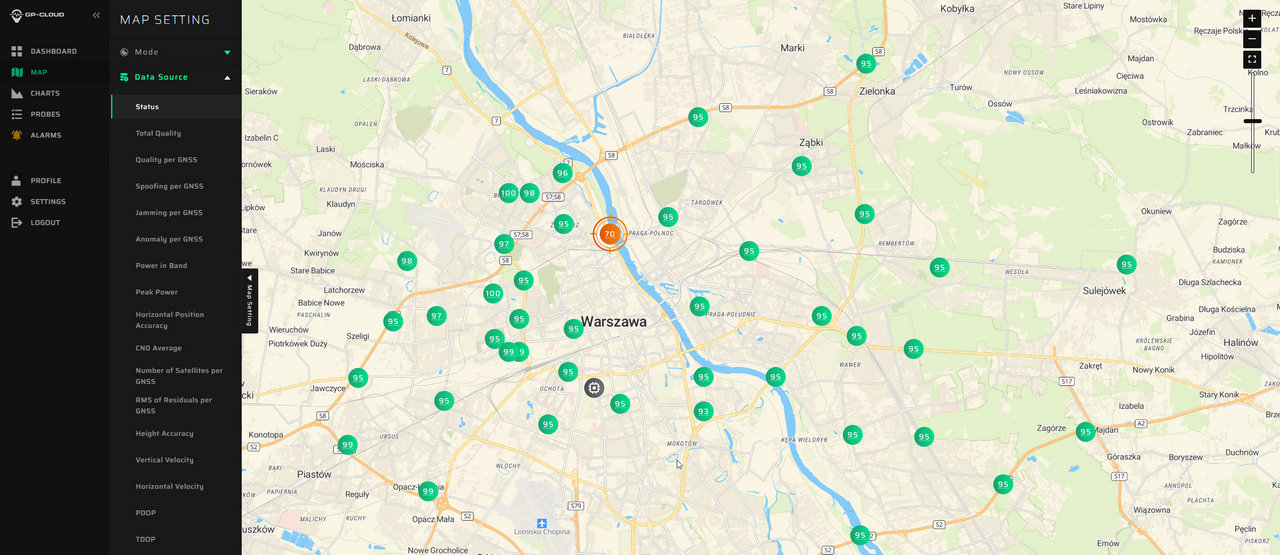
GP-Cloud is the analytical core of the GPSPATRON ecosystem. It processes data from GP-Probe devices and also supports third-party receiver data via RTCM@NTRIP, NMEA@NTRIP, and Septentrio SBF. It performs real-time anomaly detection, signal quality monitoring, event classification, data logging, notification handling, and post-event investigation support .
Key strengths:
- real-time GNSS anomaly detection,
- spoofing and jamming classification,
- support for multiple GNSS constellations,
- enterprise-grade architecture for large deployments,
- detailed charting and event investigation tools,
- REST API, RabbitMQ, and webhook-style integration options,
- cloud or on-premise deployment models.
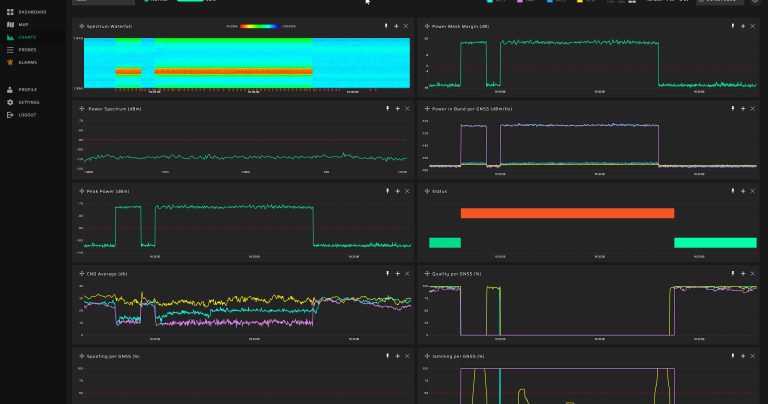
Centralized Analytics and Control
Processes probe data in real time, verifies synchronization health, and coordinates selective response across the protected infrastructure.
GP-Cloud is especially relevant for organizations looking for a centralized GNSS monitoring platform, a GNSS interference dashboard, a spoofing detection platform, or a time synchronization monitoring layer.
Typical use cases:
- monitoring critical infrastructure across many sites,
- supervising GNSS-dependent telecom and timing networks,
- supporting airport or port interference monitoring,
- collecting incident evidence and statistics,
- integrating GNSS event data into security workflows.
GP-Probe TGE2
High-performance three-channel GNSS interference detector with RF signal analyzer
GP-Probe TGE2 is the flagship detection sensor in the GPSPATRON line. It is designed to detect, classify, and localize sophisticated GNSS spoofing and jamming, with three RF channels enabling spatial signal analysis and stronger detection of coherent spoofing scenarios.
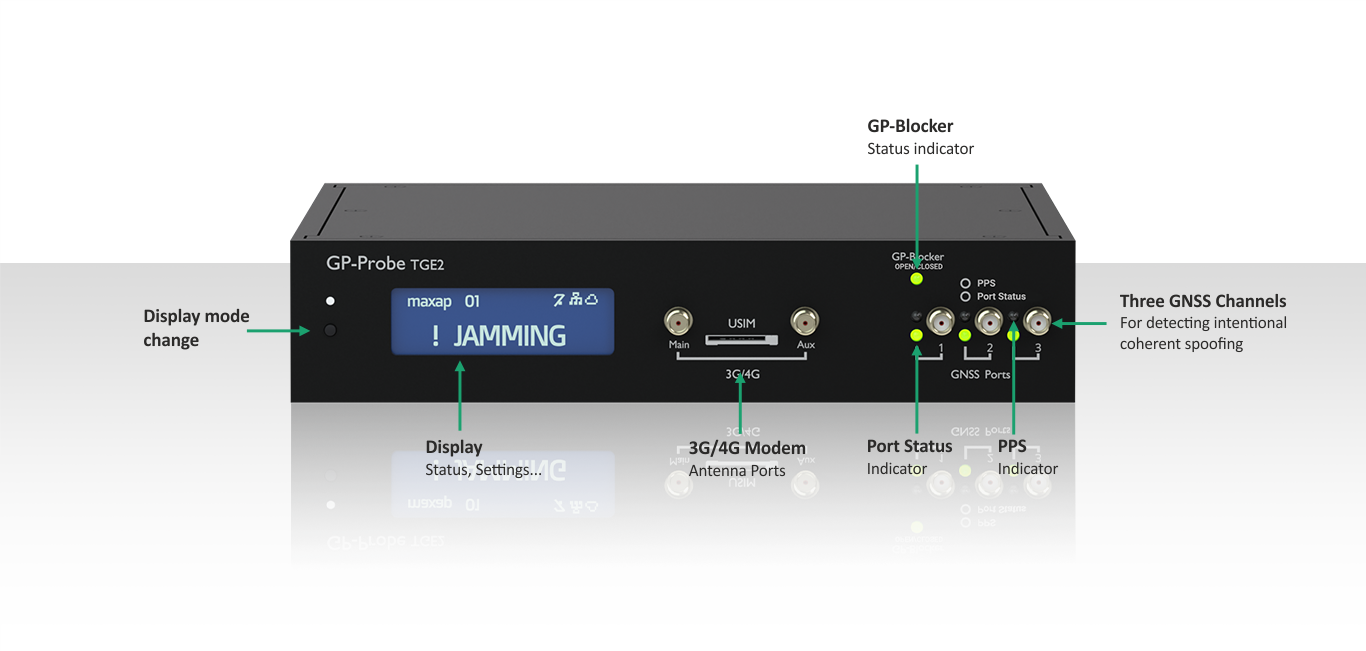
Its core capabilities include:
- three-channel GNSS signal observation,
- spatial signal analysis for advanced spoofing detection,
- built-in 60 MHz real-time RF signal analyzer,
- spectrogram and power spectrum data,
- PPS offset measurement for synchronization monitoring,
- optional TDOA workflows,
- 24/7 critical-infrastructure operation,
- Lua-based custom integration scenarios,
- optional GP-Blocker support for active protection workflows.
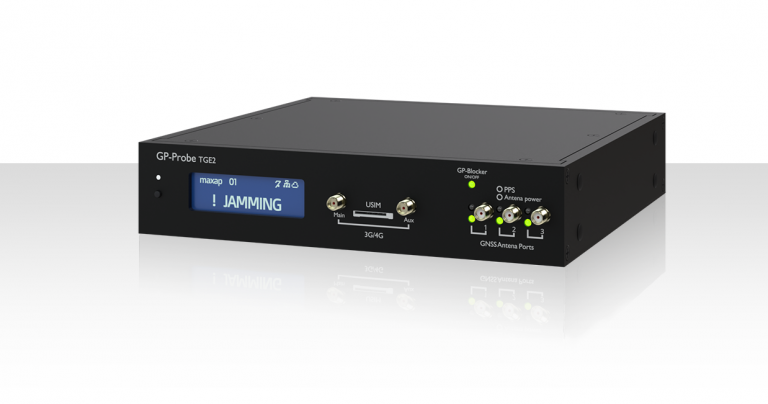
Multi-Antenna Spoofing Detection
Detects all major GNSS threat types, including coherent spoofing, using three spatially separated antennas.
This product fits organizations that need the highest level of GNSS interference visibility, especially where spoofing classification quality matters.
Typical use cases
- airports and aviation support systems,
- high-value timing infrastructure,
- national or regional GNSS monitoring networks,
- research-grade interference analysis,
- advanced critical-infrastructure monitoring.
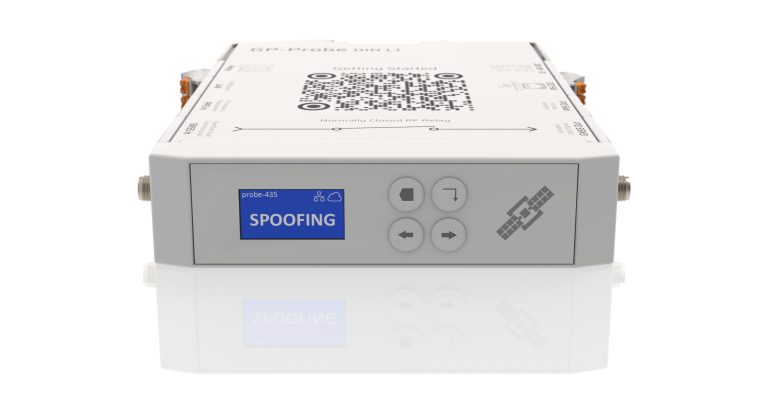
GP-Probe DIN L1
Cost-effective GNSS interference detector for large-scale deployment and timing protection
GP-Probe DIN L1 is a compact, DIN-rail-mounted detector intended for scalable deployments and practical infrastructure integration. It combines GNSS interference detection, PPS accuracy tracking, GNSS signal quality analysis, and logging in a compact format.
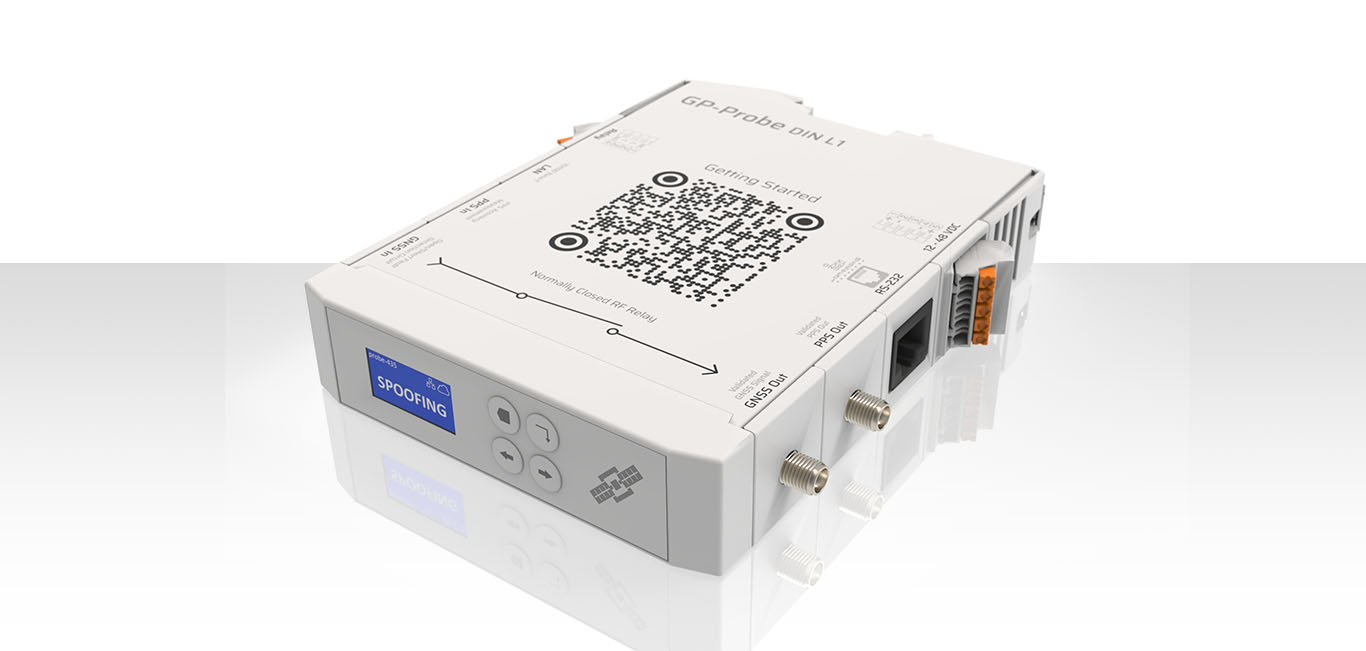
Its major advantages are:
- compact form factor for telecom and industrial cabinets,
- GNSS interference and anomaly detection,
- built-in GNSS output control and embedded spoofing blocker,
- PPS input and PPS phase monitoring,
- optional onboard signal processing for standalone operation without GP-Cloud,
- web configuration interface,
- relay and serial integration options,
- Lua scripting for user-defined response scenarios.
Inline GNSS Interference Monitoring
Installed between GNSS antenna and receiver, continuously monitors signal integrity and detects interference and signal anomaly in real time.
DIN L1 is particularly strong when you need many sensors across a distributed network and want a lower-cost unit that still integrates into operational infrastructure.
Typical use cases:
- telecom synchronization monitoring,
- timing server protection,
- distributed infrastructure sensing,
- permanent roadside or perimeter deployments,
- industrial and utility GNSS monitoring.
GP-Probe Nano L1
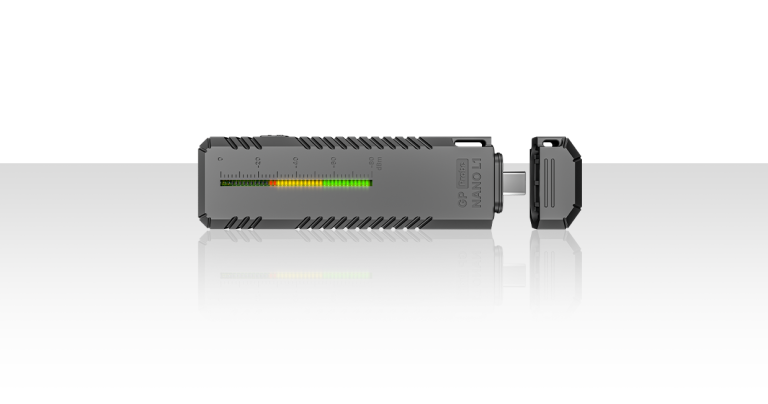
Portable GNSS jamming detector and logger for field investigations
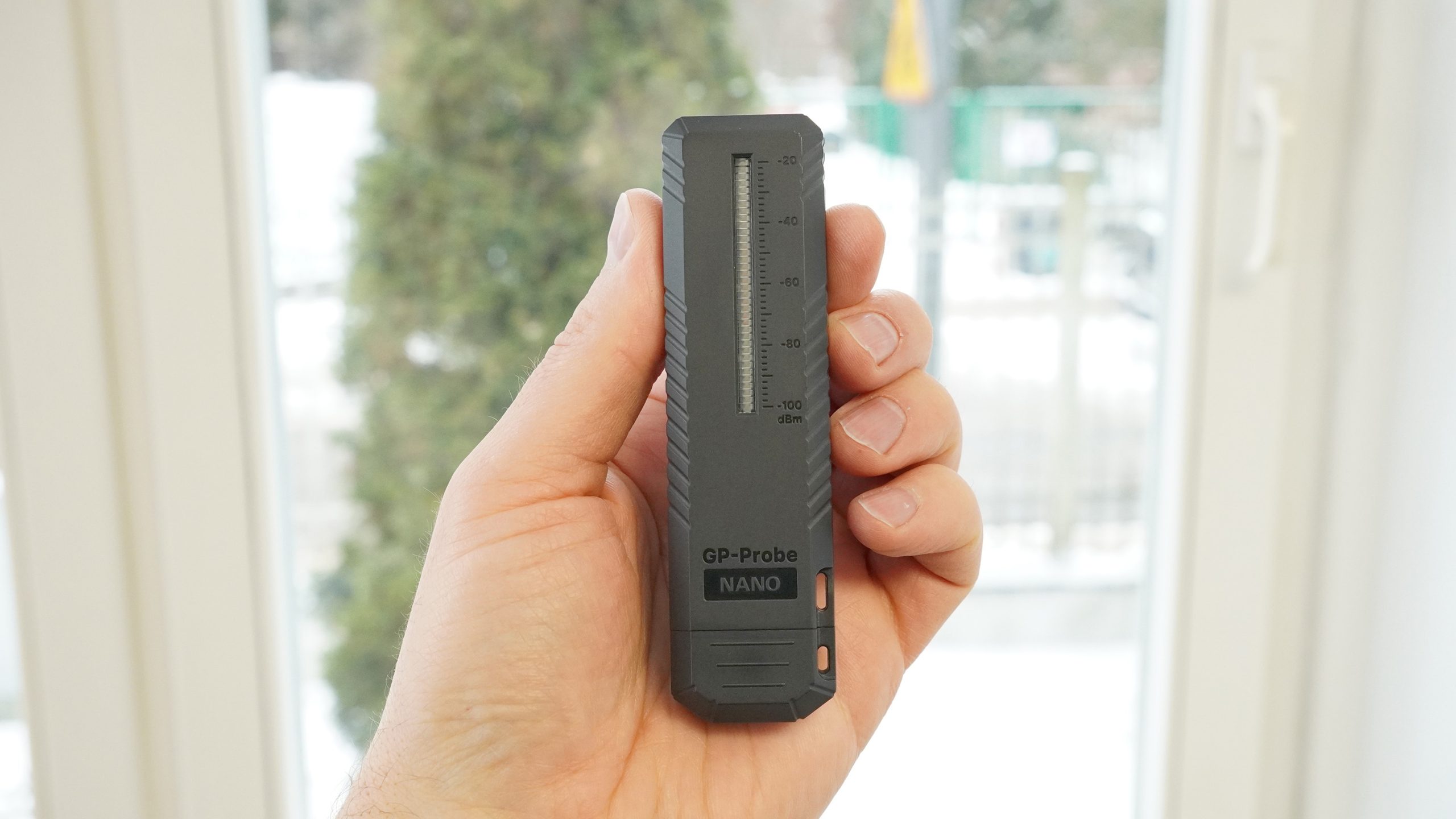
GP-Probe Nano L1 extends the portfolio into mobile and wearable detection. It is a compact detector/logger for GNSS L1-band jamming identification and field investigation, designed to work standalone or with an Android phone over USB Type-C.
Important features include:
- detector mode for live alerting,
- logger mode for long-term silent recording,
- mobile-app-assisted monitoring and analysis,
- long battery life,
- compact field form factor,
- real-time local notification via LEDs, vibration, and speaker.
Potable GNSS Interference Detector
Compact wearable detector monitoring L1 band activity and triggering instant alerts on jamming events, enabling immediate operational response.
Nano is not a replacement for fixed infrastructure sensors. It is the tactical field layer that helps teams verify, investigate, and narrow down interference sources in real environments.
Typical use cases:
- vehicle jammer detection,
- law enforcement and roadside patrol,
- airport perimeter inspections,
- fleet and logistics investigations,
- compliance audits and mobile spectrum monitoring.
GP-Simulator 2
Advanced GPS Spoofing Simulation Platform
GP-Simulator 2 is a multi-channel SDR-based GNSS signal simulator designed for controlled testing of navigation and timing systems under realistic and complex interference conditions. It enables engineers to reproduce non-coherent and coherent spoofing scenarios in a laboratory or field environment, providing full control over signal parameters, timing behavior, and constellation configuration.
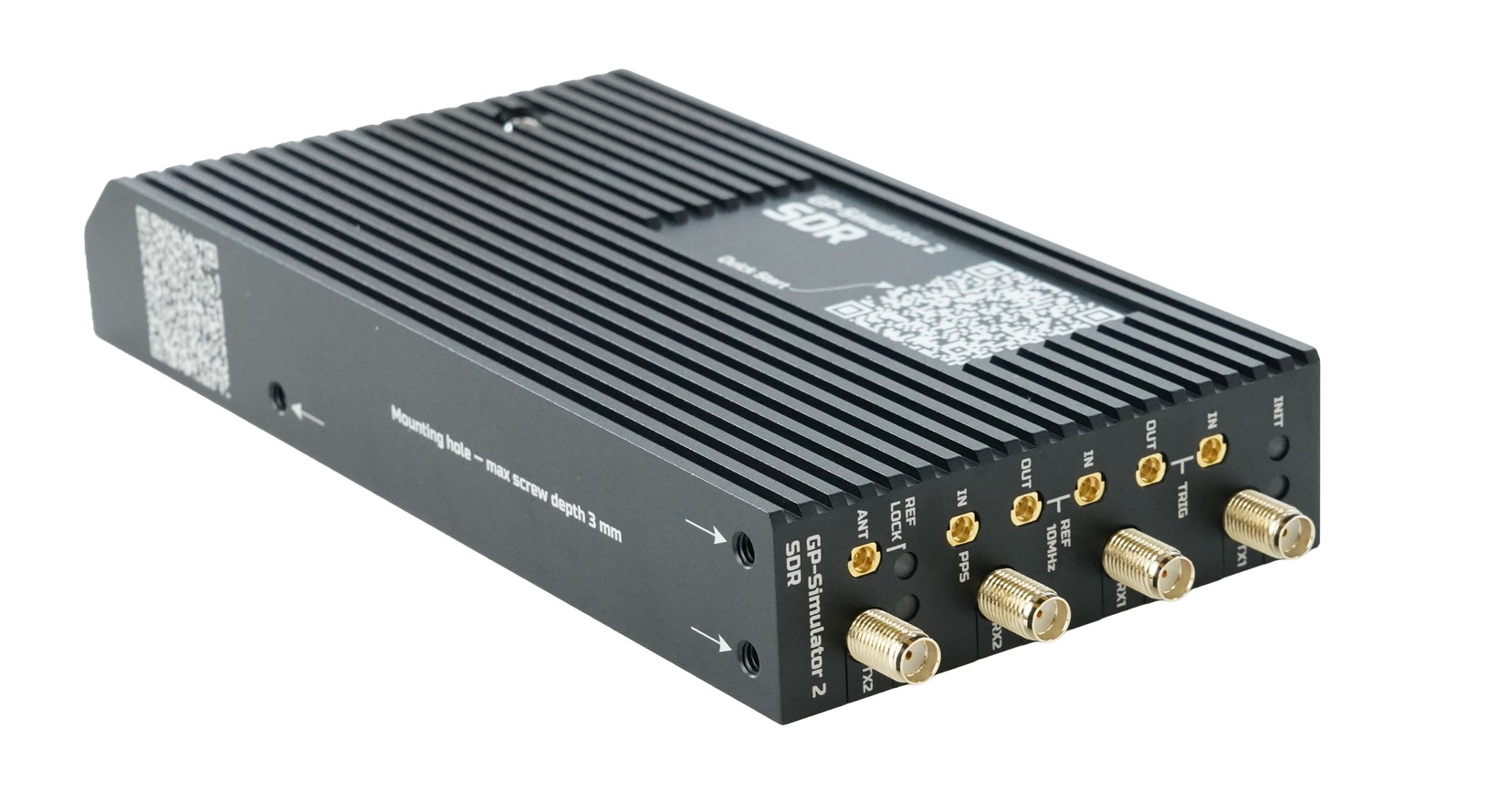
Its core capabilities include:
- repeatable, lab-grade test scenarios for deterministic GNSS testing,
- coherent spoofing with precise position and time manipulation,
- PPS phase shift and satellite clock error simulation,
- live-sky mode combining simulated signals with real antenna input,
- full control over position, altitude, and dynamic trajectories,
- automatic retrieval of almanac and ephemeris data for realistic conditions,
- compatibility with a wide range of SDR hardware platforms.
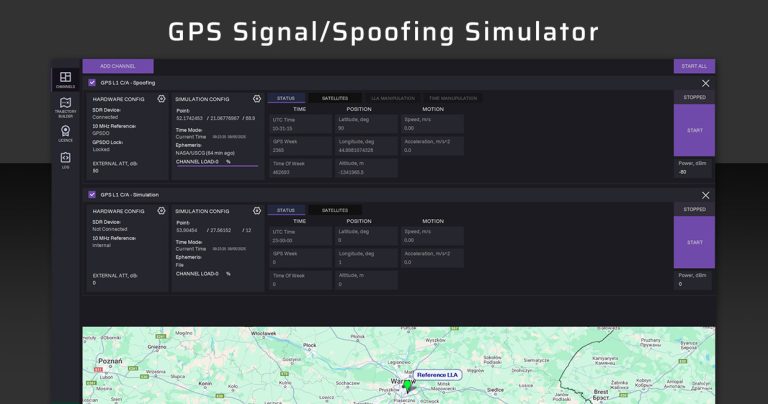
Controlled GNSS signal simulation
Reproduces realistic spoofing scenarios and signal conditions for testing receiver behavior and system resilience.
GP-Simulator 2 is not a monitoring tool. It is a testing and validation platform used before deployment or during system certification. It allows organizations to move from theoretical assumptions about GNSS resilience to measurable, repeatable results.
Typical use cases:
- testing GNSS receiver resistance to spoofing attacks,
- validation of timing systems under manipulated GNSS signals,
- development and benchmarking of anti-spoofing algorithms,
- certification and compliance testing,
- training of operational teams in controlled environments,
- combined testing with interference sources such as GP-Jammers.
This product is particularly relevant for R&D teams, security laboratories, defense organizations, and infrastructure operators who need to quantify GNSS vulnerability rather than assume it.
GP-Jammer
Controlled GNSS Jamming Generation for Resilience Testing
GP-Jammer is a controlled GNSS interference generation system designed to reproduce real-world jamming conditions for testing, validation, and training purposes. It provides a deterministic and configurable RF interference source that allows engineers to evaluate how systems behave under degraded or denied GNSS conditions.
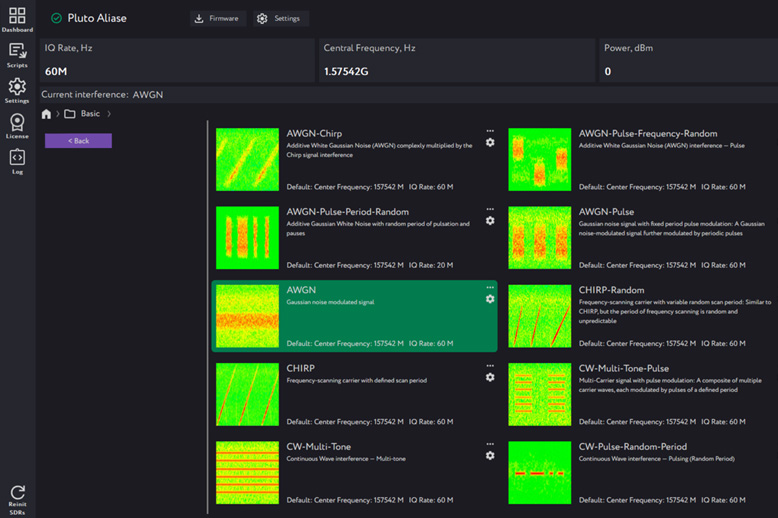
Key capabilities include:
- generation of broadband and narrowband GNSS jamming signals,
- adjustable output power for near-field and far-field testing scenarios,
- configurable modulation types reflecting real-world jammer behavior,
- multi-channel architecture for complex interference environments,
- synchronization with GP-Simulator 2 for combined spoofing + jamming tests,
- repeatable and controlled test conditions for engineering validation.
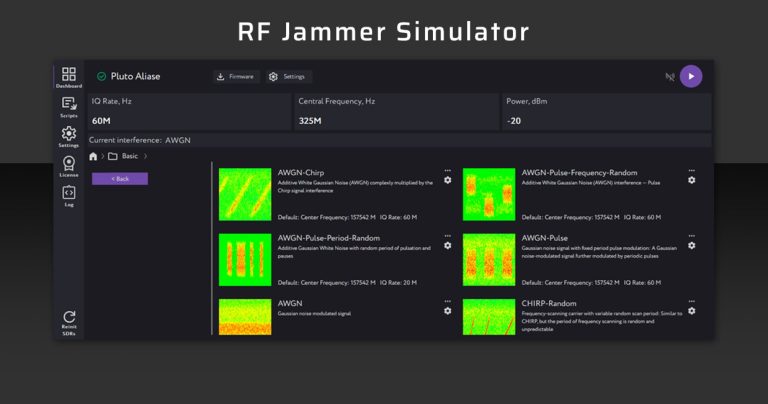
Controlled GNSS jamming generation
Generates configurable jamming signals to evaluate system performance under degraded or denied GNSS conditions.
Unlike illegal or uncontrolled jamming devices, GP-Jammer is designed for authorized testing environments, where understanding system behavior under interference is critical.
Typical use cases:
- resilience testing of GNSS receivers and integrated systems,
- validation of anti-jamming technologies and filtering techniques,
- testing telecom and timing infrastructure under GNSS degradation,
- evaluation of autonomous systems under signal loss conditions,
- laboratory and field training for interference response scenarios.
By introducing controlled interference into the testing process, organizations can identify failure points, improve system robustness, and ensure predictable behavior under real-world conditions.
Implementation Considerations
GNSS interference is a complex, multi-layered problem. It cannot be solved with a single device or a “silver bullet” approach. Effective protection requires a combination of detection, analysis, monitoring, and controlled testing—working together as a system.
To better understand how this can be implemented in practice, we recommend downloading our product portfolio and presentation, where all components and approaches are described in detail.
If you prefer a more direct approach, book a meeting with our team. We will quickly review your specific use case, outline potential risks, and recommend a practical solution tailored to your infrastructure.
Enter your details and we will send the download link to your email.


