

In May 2017, six armed men disguised as police officers ambushed a Loomis armored vehicle on the Geneva-Lausanne motorway in Switzerland. They escaped with approximately 40 million Swiss francs in cash, gold bars, and precious stones. At the subsequent trial in Lyon, the company’s security director testified that GPS tracking data stopped transmitting at 2:50 a.m. The only explanation, he stated, was the presence of a signal jammer on site. A GPS jammer was later recovered among the seized equipment, alongside four assault rifles and fake police armbands.
This incident is not an outlier. GPS jamming has become a standard tool in the criminal playbook against convoys, from cash-in-transit vehicles in Europe and South Africa to high-value freight trucks across Italy and Latin America. The problem is growing: GNSS interference incidents increased 220% between 2021 and 2024, spoofing attacks surged 500% in 2024 alone, and cheap jammers remain available online for as little as $5. For convoy operators, the question is no longer whether GPS jamming will affect your operations, but when.

The Scale of GPS Jamming in Convoy Operations
Cargo theft costs the European logistics industry an estimated 8.2 billion euros annually, according to the European Parliament. In 2023, TAPA EMEA recorded 103,529 supply chain theft incidents in the EMEA region, with losses reaching 724 million euros, a 163% increase over 2022. The use of GPS jammers in these thefts is now systematic in several high-risk corridors.
Where Jammers Are Standard Criminal Equipment
Italy: Criminal organizations including the Sacra Corona Unita, Camorra, and ‘Ndrangheta have systematized GPS jammer use in truck hijackings. In the Puglia region, 100% of documented truck diversions involved GPS jamming. The operational pattern is consistent: intercept the truck, restrain the driver, activate the jammer, then unload cargo at a secondary location.
Mexico: An estimated 85% of freight truck thefts involve GPS signal jammers. In one documented case from 2024-2025, 24,000 bottles of tequila disappeared after GPS spoofing redirected tracking data from trucks near Laredo, Texas. A January 2020 law now prescribes 12 to 15 years of imprisonment for jammer use.
South Africa: Cash-in-transit heists represent an epidemic, with 35 CIT attacks recorded in January 2020 alone. In July 2022, five robbers intercepted in Botswana during a CIT heist attempt were found carrying an AK47, three pistols, and a communications jammer. TAPA EMEA documented a May 2023 incident on the Port Elizabeth-Cape Town route where a logistics vehicle was hijacked using a GPS jammer, with losses of 2.09 million euros.
United Kingdom: An organized crime network stole premium vehicles, placed them in containers equipped with GPS jammers, and exported them via France to Uganda. The UK’s Sentinel project detected 50 to 450 GPS jamming incidents per day on British roads, mostly from commercial vehicle drivers.
Why Standard Fleet Tracking Systems Fail Under Jamming
GPS signals arrive at a receiver at extremely low power after traveling 20,000 km from orbit. A cigarette-lighter jammer costing under $50 can overpower this signal within a 5 to 10 meter radius. More powerful models extend this range to hundreds of meters or even kilometers.
Fleet management platforms depend entirely on GPS for real-time vehicle tracking. When a jammer activates, these systems experience what appears to be a simple signal loss. The vehicle disappears from the map. There is no alert distinguishing an intentional attack from a tunnel, a parking garage, or an equipment malfunction.
This creates a critical operational gap. The moment a jammer activates, which is typically the first technical step before a physical attack, is precisely the moment when tracking information matters most. Yet it is exactly when conventional systems go blind.
Early Warning: How GPS Jamming Detection Protects Your Convoy
Every GPS jammer emits a detectable radio frequency signature the moment it powers on. A portable GNSS jamming detector picks up this signature and alerts the operator instantly, often seconds before the physical attack begins. This transforms jammer activation, the attacker’s first technical step, into the convoy’s earliest threat indicator. When a criminal activates a jammer near a convoy, that activation produces a detectable radio frequency signature. A portable GNSS jammer detector picks up this signature and alerts the operator, often seconds before the physical attack begins.
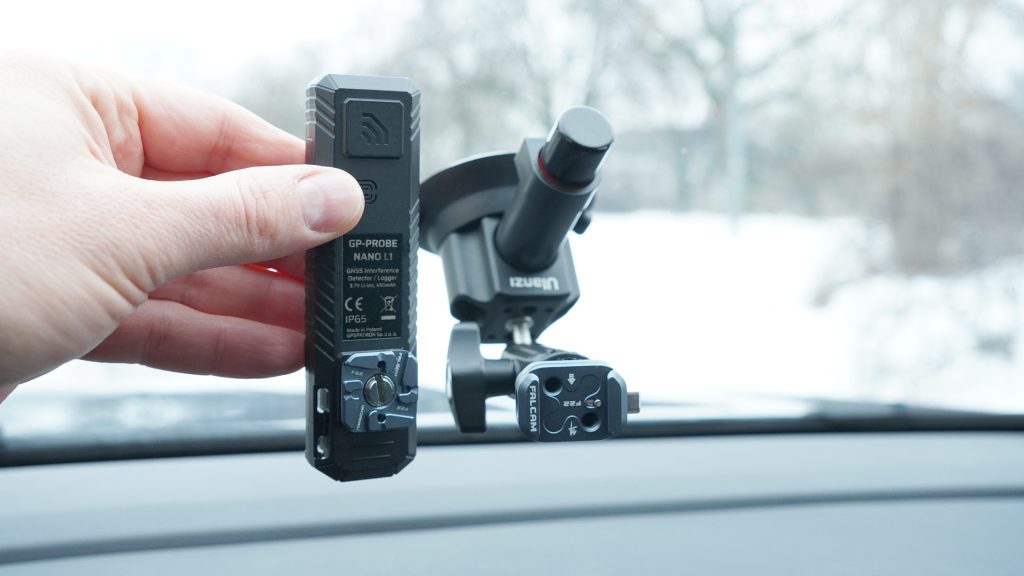
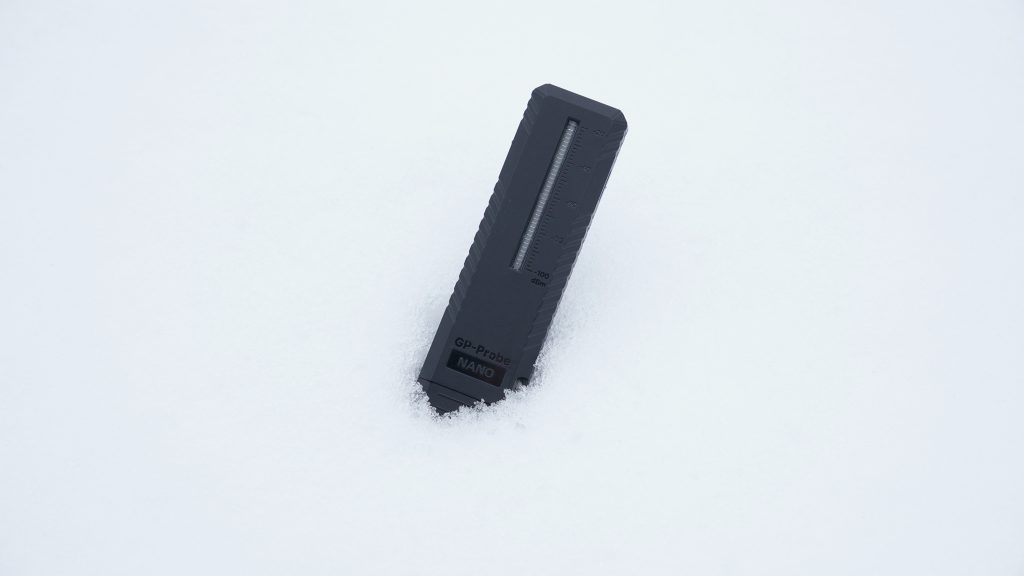
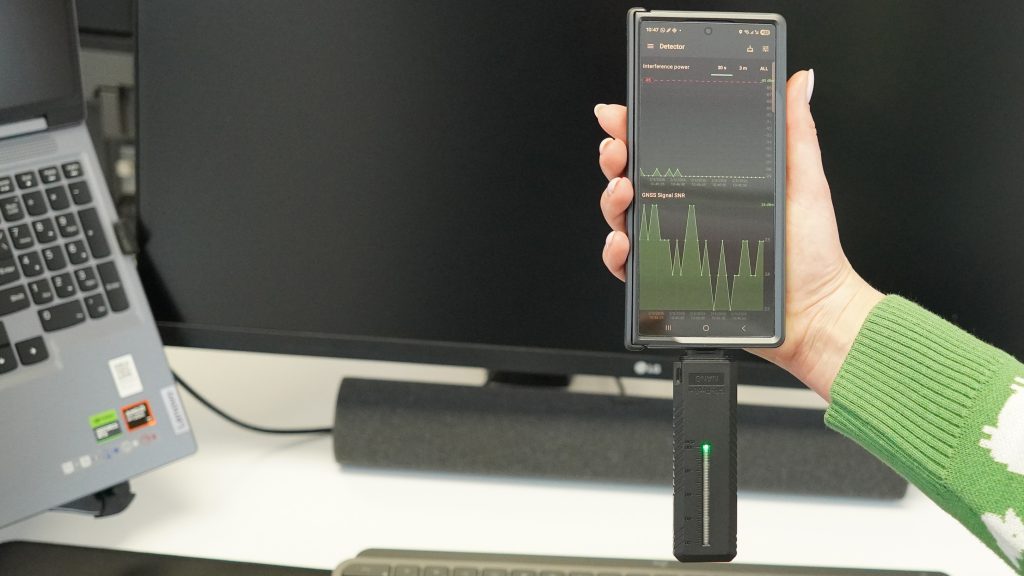
This changes the operational equation. The jammer activation, previously an invisible precursor to assault, becomes the convoy’s earliest threat indicator. The GP-Probe Nano L1 from GPSPATRON is designed for this use case: a pocket-sized GNSS interference detector measuring 113 x 31 x 15 mm, weighing approximately 50 grams, with 30 days of battery life in detection mode and 3 months in logger mode.
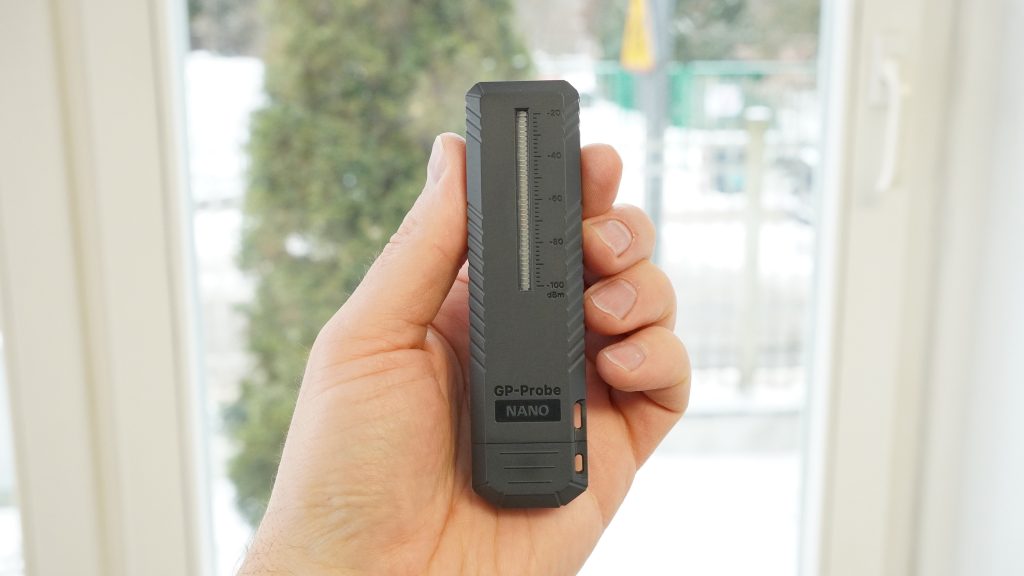
GP-Probe Nano Specification
Jammer Detection Range
For usb-style low-power (5 dBm) jammer:
- Up to 200m in line-of-sight conditions
- 50m when jammer is inside a vehicle
Operational Modes
Standalone Operation:
(without connection to a smartphone)
- Detector Mode
- Logger Mode
Smartphone-Assisted Operation:
(via GPSPATRON Connect app)
- Monitoring Mode
- Localization Mode – Coming soon
- Patrol Mode – Coming soon
- Sentinel Mode – Coming soon
RF Power Measurement Dynamic Range
+5 dBm to -100 dBm
Notification
Configurable in app:
- Speaker
- Vibration
- 36 LEDs
Operating Time
Up to 1 month in Detector mode (2 measurements per second).
Up to 3 months in Logger mode (1 measurement per second).
Mechanical
| Enclosure: | Ruggedized, IP65-rated for dust and water resistance |
| Size: | 113 × 31 × 15 mm |
| Weight: | ~50 g |
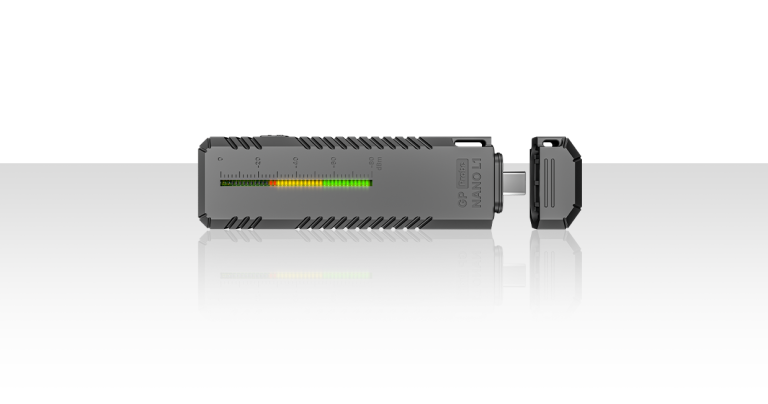
Real-Time GNSS Interference Detection
Compact wearable detector monitoring L1 band activity and triggering instant alerts on jamming events, enabling immediate operational response.
How It Works in Practice
Using the GP-Probe Nano L1 on a convoy mission is straightforward.
- Bring it on board. Clip the detector to your belt or slide it into a jacket pocket before departure. No installation, no wiring, no vehicle modification. It works out of the box.
- Get alerted when jamming starts. The moment a GPS jammer activates nearby, the Nano L1 triggers an immediate alarm: vibration, audible alert, and a rising LED bar. You know something is wrong before your fleet tracking system even registers a signal loss.
- Detect threats at long range. Detection distance depends on jammer power. Attackers targeting convoys typically use high-power devices that are detectable from up to 1,000 meters. A small USB jammer is detectable at approximately 50 meters. Either way, you receive the warning well before the physical interception.
- Watch the threat approach. The 36-LED power level indicator shows whether the interference source is getting closer or moving away. A rising signal means the threat is approaching your position, giving you real-time situational awareness.
- React before contact. Those seconds of advance warning give your team time to call for help, alert the operations center, change route, or activate threat response procedures. Without a detector, the first sign of trouble would be your vehicles disappearing from the tracking map, typically noticed 3 to 5 minutes later.
Measurable Benefits for Convoy Security Teams
Early warning time: Detection range of up to 200 meters means personnel receive alerts 15 to 60 seconds before a jammer fully disrupts GPS tracking. In convoy ambush scenarios, these seconds determine whether crews react before or after physical contact.
Deployment speed: Zero installation time. A new operator can be briefed and equipped in under one minute. This makes the Nano L1 practical for temporary details, ad-hoc escort missions, and situations where modifying vehicles is not possible.
Cost scalability: The Nano L1 requires no installation, no integration, and no per-vehicle hardware. One detector per crew member is all it takes. For organizations running dozens of daily convoys, this means equipping every team without a significant capital investment.
Evidence generation: Every interference event is logged with timestamp, GPS coordinates (if connected to a mobile phone with GPSPATRON Connect App), and signal strength data. This creates a forensic record for law enforcement investigations and insurance claims.
Route intelligence: Over time, logged data reveals jamming hotspots along regular convoy routes. Security planners can identify high-risk segments, adjust routes proactively, and correlate jamming activity with theft attempt patterns.
Regulatory Context: Why the Problem Keeps Growing
GPS jammers are illegal throughout the European Union under the Radio Equipment Directive 2014/53/EU. In France, possession or use carries 6 months imprisonment and a 30,000 euro fine. The UK’s Wireless Telegraphy Act 2006 prescribes up to 2 years imprisonment. In the United States, the FCC levied a $34.9 million fine against a Chinese manufacturer selling 285 jammer models.
Despite these penalties, enforcement remains weak. GPS jammers cost as little as $5, are small enough to fit in a pocket, and are openly sold on e-commerce platforms. In most European countries, buying a jammer is technically legal; only using it is prohibited. Finland is currently preparing new legislation that would also ban the purchase of jammers, recognizing that the current “buy but don’t use” approach is unenforceable. Until more countries follow suit, the gap between the law and reality means convoys must assume jammers will be present on the road.
This regulatory reality is precisely why early warning detection matters. You cannot rely on laws to keep jammers off the road. What you can do is detect them the moment they activate near your convoy.
These developments confirm a clear trend: GNSS security is moving from a military niche to a mainstream regulatory priority. Organizations that can demonstrate active GNSS monitoring will be better positioned as compliance frameworks evolve.
From Blind Spot to Early Warning
GPS jamming is now a standard tool for organized crime targeting convoys. The data leaves no room for doubt: 220% growth in interference incidents, systematic use in cargo theft across Europe, Latin America, and Africa, and cheap jammers available to anyone for a few dollars online.
Standard fleet management systems offer no defense. When the jammer activates, the tracking stops. Your vehicles disappear from the map precisely when you need to see them most.
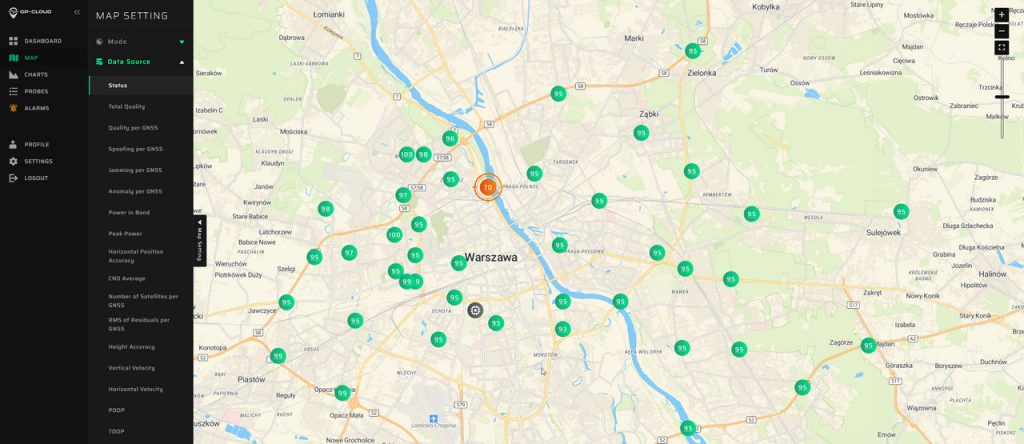
The GP-Probe Nano L1 changes this. A pocket-sized detector that alerts your team the instant GPS jamming begins, with enough range and advance warning to react before the attack unfolds. Combined with the GP-Cloud platform for post-mission analysis and route intelligence, it turns every convoy mission into a source of operational data.
The attacker’s first move becomes your first warning.
Flexible Deployment: From Personal Detector to Fleet-Level Monitoring
The GP-Probe Nano L1 works at any level of complexity — from a personal detector to a connected fleet monitoring tool.
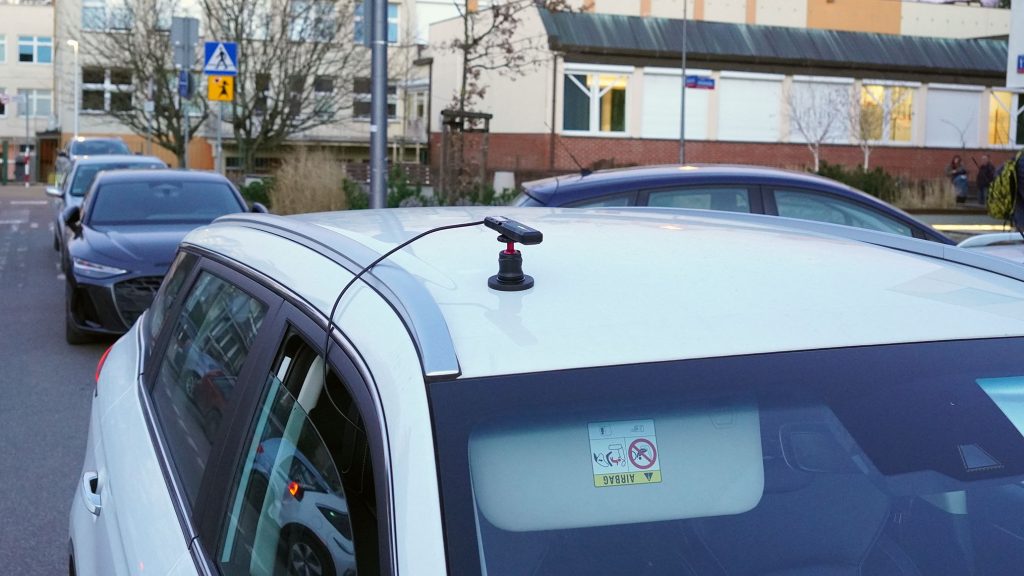
Use it standalone for instant alerts with no setup, or install it in a vehicle for continuous mobile detection. When connected to the GPSPATRON Connect app, it provides real-time visualization and geotagged event logging.
With GP-Cloud, multiple detectors can be combined into a centralized monitoring system, giving full visibility of jamming activity across all convoy routes.




See It in Action — Book a Live Demo
If this article reflects challenges you are already facing in convoy operations, the next step is simple: see how it works in a real scenario.
We offer short, focused demo sessions where we simulate real GNSS jamming conditions and show exactly how the GP-Probe Nano L1 behaves in practice — from first detection to operator response.


