

RF Jammer Found at Warsaw-Okęcie Airport, Individual Detained
Polish security services are investigating an incident at Warsaw-Okęcie Airport after a 23-year-old individual was detained on 26 December 2025 for possession of an illegal radio‑frequency jamming device, local media reported. The equipment, which can interfere with aviation communications and navigation systems, was discovered during a routine security check after the individual had reportedly spent several hours seated in an airport café, ordering drinks and snacks while using a laptop. According to prosecutors, the device can operate in frequency ranges reserved for aviation communication, radar and navigation, and its presence in a critical infrastructure facility was treated with particular seriousness by investigators.
Authorities said the individual was questioned on-site before being referred to agencies responsible for aviation safety and internal security. Prosecutors have charged him under provisions of the Polish Aviation Law related to actions “endangering the safety of air traffic,” and a court has ordered him temporarily detained while experts examine the jammer, laptop and phone to determine their technical characteristics and possible prior use. The suspect, who has given inconsistent explanations about his background and purpose in Poland, has not explained why he was at the airport or why he owned the device.
Earlier Warsaw Case Involving RF Jammers
The incident follows an earlier case in Warsaw in early December 2025, when three men in their 30s and 40s were detained during a routine roadside police operation. According to media reports, officers stopped the vehicle on 8 December 2025 and discovered a range of electronic equipment inside that was described as surveillance or hacking tools.

Police stated that the seized items included detectors, antennas, laptops, data storage devices, routers, SIM cards, and other electronic components that could potentially be used to interfere with information systems or conduct unauthorized surveillance. Photographs released by authorities show that the confiscated equipment also included radio-frequency devices consistent with signal jammers, although investigators did not publicly confirm how the devices were intended to be used.
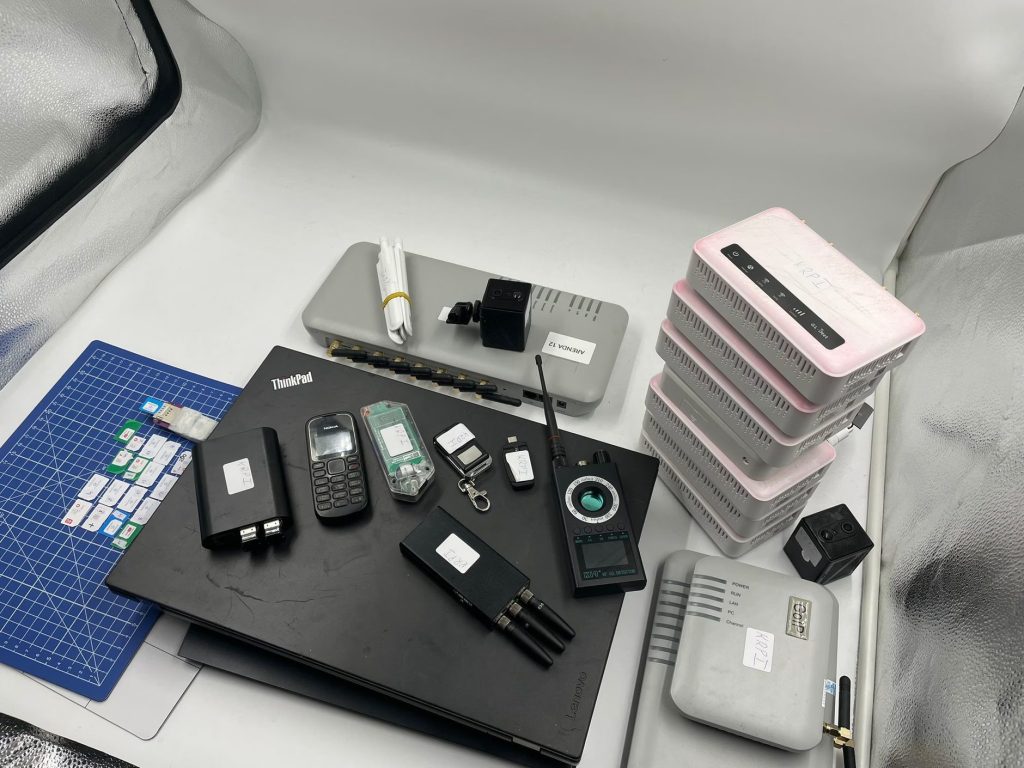
The men were unable to provide a clear explanation for possessing the equipment and were subsequently charged with offenses including computer-related fraud and possession of devices adapted for criminal use. The investigation involved multiple law enforcement and security agencies.

What Radio-Jamming Devices Can Be Used For
Radio-frequency jamming devices are designed to disrupt or block wireless signals, including mobile communications, GPS/GNSS navigation, and radio links. While such devices are illegal in most countries, they remain widely available online.
In sensitive environments such as airports, RF jammers can interfere with:
- Aircraft navigation and surveillance systems
- Air traffic control communications
- Satellite-based timing and positioning services
- Drone detection and counter-UAS systems
- Emergency and safety-critical communications
Even low-power, portable jammers can have disproportionate effects due to the extremely weak nature of GNSS signals received on the ground.
Why RF Jamming at Airports Is Treated as a Potential Act of Sabotage
Airports are among the most technologically dependent elements of modern critical infrastructure. Air traffic management, aircraft navigation, ground operations, surveillance systems, and even emergency response increasingly rely on satellite navigation and radio-based communications. This dependence means that deliberate radio-frequency interference, even if localized or short-lived, can have consequences that extend well beyond a single system.
Unlike accidental interference caused by malfunctioning equipment, RF jamming is by definition an intentional act. The presence of such devices in airport environments therefore raises immediate concerns about motive, intent, and potential escalation. Authorities cannot assume that interference is harmless, experimental, or opportunistic, particularly in a security environment shaped by hybrid threats, sabotage, and terrorism. In such contexts, speed of detection and response is crucial. Delays of minutes, not hours, can determine whether an incident remains isolated or develops into a serious operational disruption.
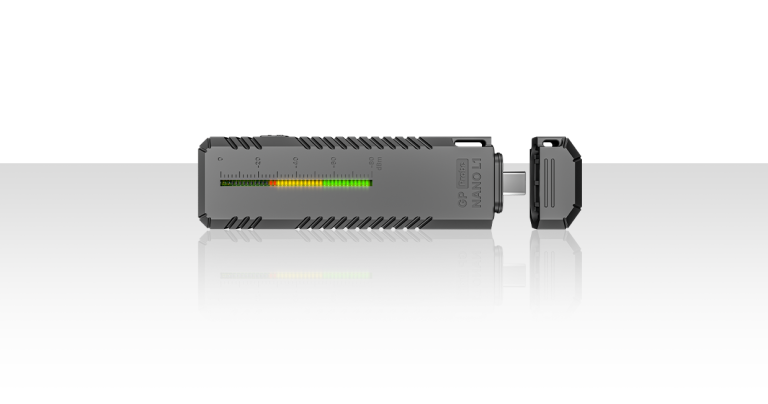
Ultra-compact wearable GNSS jamming detector for field use and source localization.
This reality has led to increased emphasis on real-time monitoring of the radio-frequency environment at airports and other sensitive sites. Continuous situational awareness allows security services to detect anomalies early, assess their potential impact, and initiate targeted responses before interference affects safety-critical systems.
Equally important is the human factor. Technical detection must be matched by trained personnel capable of interpreting alerts and acting decisively. Portable detection tools, used by patrols and security staff, can support rapid on-site identification of interference sources, helping to localize potential threats in crowded or complex environments.
In an era where deliberate disruption of civilian infrastructure is a recognized tactic, RF jamming at airports is no longer viewed as a technical nuisance. It is increasingly understood as a security issue with potential sabotage or terrorist implications, demanding preparedness, vigilance, and the ability to respond in real time.


