

Today, many vehicle owners and fleet operators install hidden GPS trackers to locate and recover their cars if stolen. Professional thieves know this. That’s why organized criminals now routinely carry low-cost GPS jammers: compact devices, often powered by a cigarette lighter, that neutralize tracking systems instantly. The moment the jammer activates, the vehicle vanishes from recovery platforms.
But here’s what criminals don’t realize: to an officer carrying a portable GPS jammer detector, that same vehicle is broadcasting its presence. The jammer creates a detectable RF bubble extending up to 500 meters, turning the criminal’s hiding tool into a signal that betrays their location.
This article explores how patrol units and tactical teams can use compact, wearable jammer detection to locate stolen vehicles during field operations, from routine patrols to targeted interdiction.
The Problem: Stolen Vehicles Disappear Digitally
Professional vehicle thieves have adapted to GPS tracking technology. According to law enforcement sources cited by the UK Government, 80-85% of organized vehicle thefts now involve GPS jammers. For less than €30, criminals can purchase a cigarette-lighter-powered device that neutralizes standard GPS trackers instantly.
The moment the jammer activates, the vehicle vanishes from fleet management and recovery platforms. The owner receives no alerts. Traditional tracking becomes useless. Without intervention, recovery rates collapse from 90-95% with a functioning tracker to approximately 23-25% without one.
Officers in the field face a particular challenge. A stolen vehicle might pass within meters of a patrol car, completely indistinguishable from legitimate traffic. The jammer neutralizes any tracking system, but patrol officers have historically had no way to detect the jammer itself.
Until now.
The Hidden Signal: How Jammers Betray Their Users
A GPS jammer works by broadcasting radio frequency energy that overwhelms the weak signals from GNSS satellites. GNSS signals arrive at Earth’s surface at approximately -130 dBm, far below the ambient noise floor. Even a low-power jammer operating at 10-20 milliwatts can overpower these signals across a radius of 250-300 meters.
But this creates an exploitable weakness. The jammer does not create invisibility; it creates a signal. Anyone with a receiver tuned to GNSS frequencies can detect the anomalous RF energy. The same device that makes the vehicle invisible to tracking makes it visible to detection.
The detectable “bubble” around an active jammer extends tens to hundreds of meters depending on the jammer’s power output. A sensitive detector can identify jamming activity at ranges up to 500 meters, well before the target vehicle comes into visual contact.

Introducing GP-Probe Nano L1: Detection That Fits in a Pocket
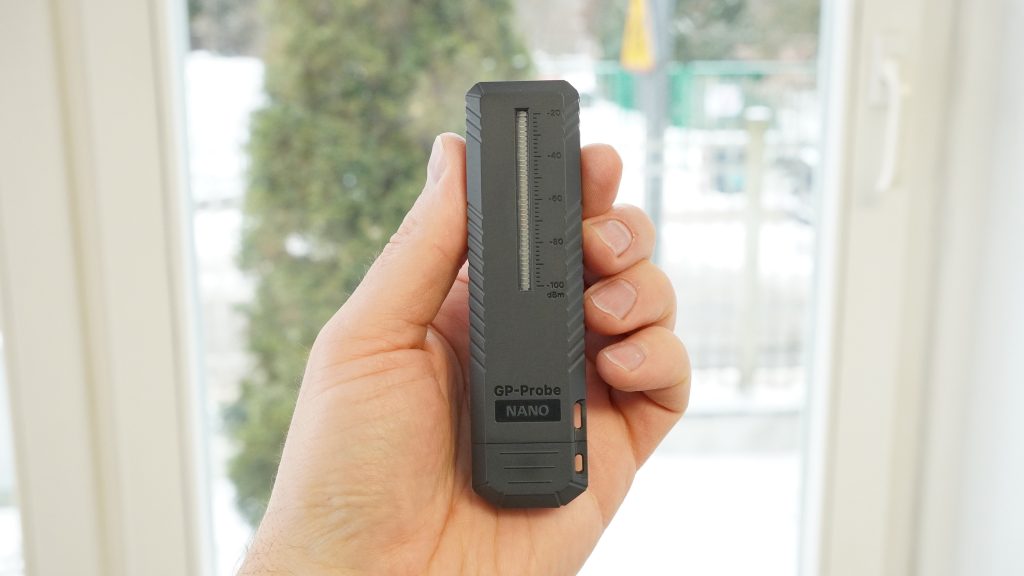
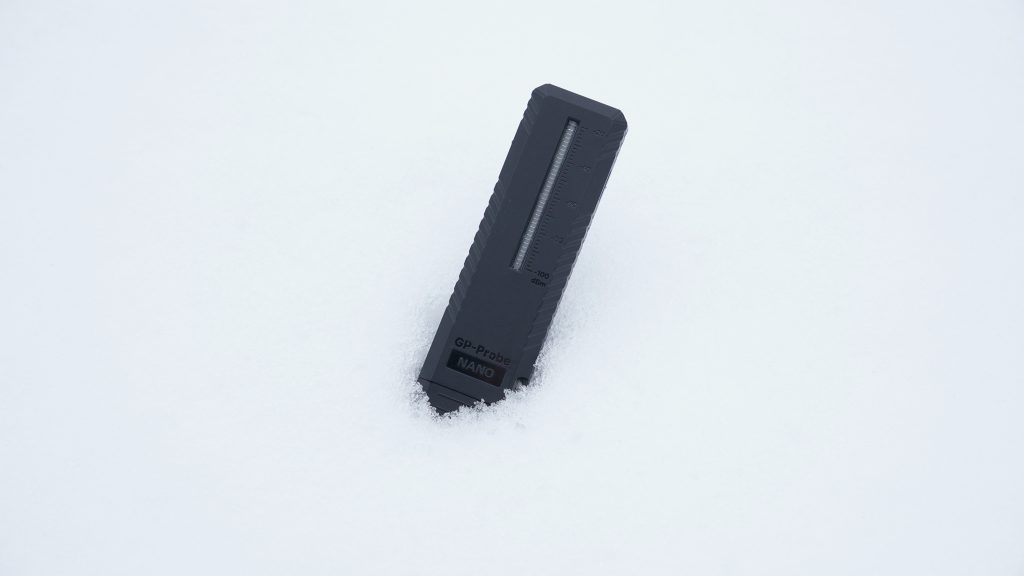
The GP-Probe Nano L1 is a wearable GNSS interference detector designed for field operations. Roughly the size of a USB flash drive, it provides real-time alerts when jamming activity is present.
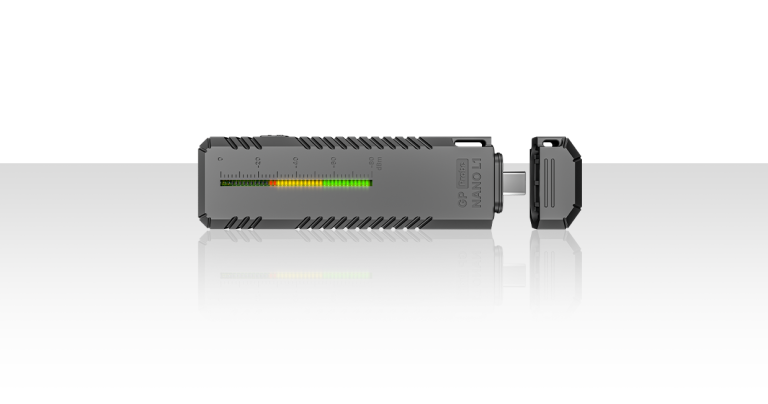
Ultra-compact wearable GNSS jamming detector for field use and source localization.
Alert System
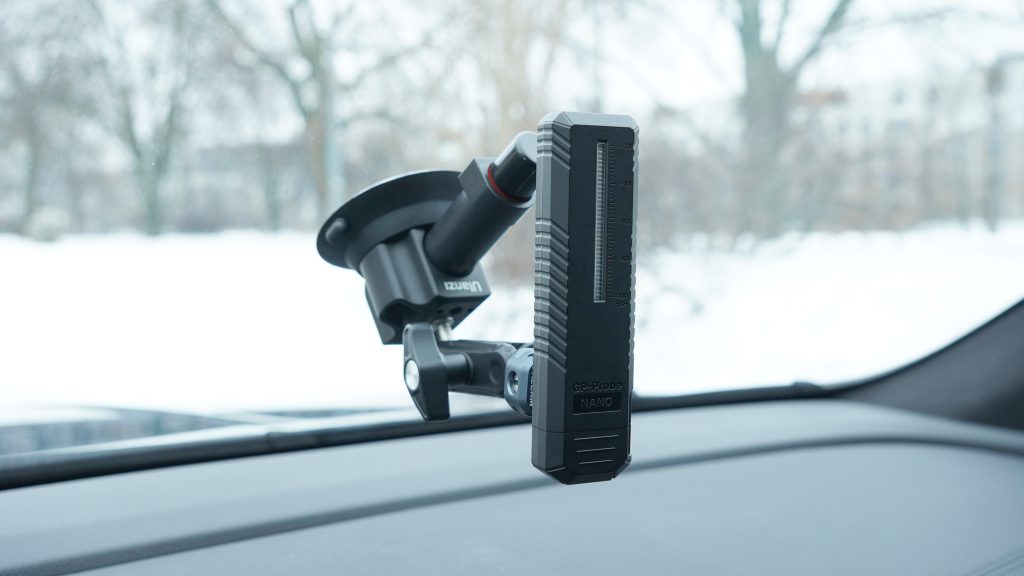
The device uses three simultaneous alert methods: vibration motor (for discreet notification), audible speaker, and a 36-LED power scale that indicates interference intensity. As the officer approaches a jamming source, the LED scale rises, providing intuitive direction-finding capability without requiring screen interaction.
Operating Modes
In Detector Mode, the device provides real-time alerts with up to 30 days of continuous battery life. In Logger Mode, it records interference events autonomously for up to 3 months, useful for long-term surveillance or forensic analysis of a suspect location.
Smartphone Integration
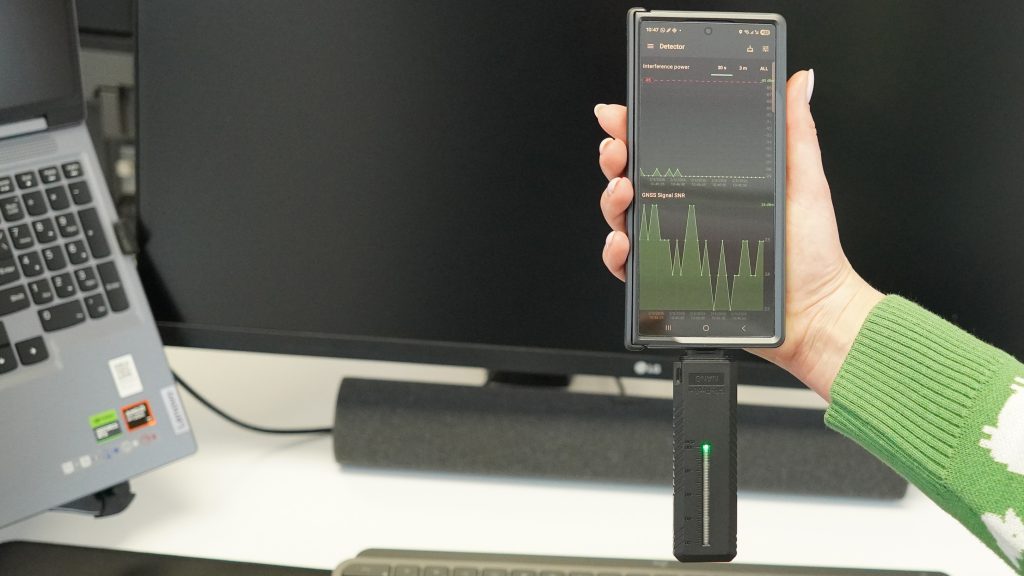
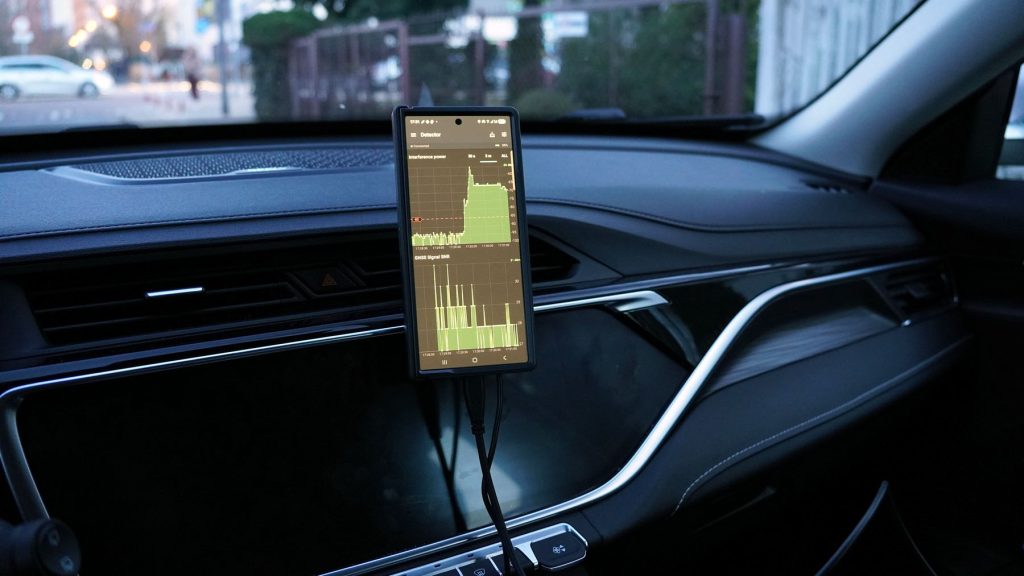
Connected via USB Type-C to an Android device running the GPSPATRON Connect app, the Nano provides real-time power graphs, signal-to-noise ratio displays, and geotagged measurements. The app supports multiple operational modes including Monitoring, Patrol, and Sentinel.
Detection Range
The Nano detects standard cigarette-lighter jammers at ranges up to approximately 500 meters in open environments. In urban settings with buildings and other obstructions, effective range varies but typically remains sufficient to identify vehicles before they pass out of the patrol area.



Field Use Cases: Where Portable Detection Makes a Difference
Patrol Vehicle Operation
With the Nano mounted on a windshield suction holder inside the patrol vehicle, patrol crews receive automatic alerts when a jammer-equipped vehicle passes nearby. The device monitors continuously while officers conduct normal patrol duties. This passive detection requires no active scanning: officers continue normal patrol duties while the device monitors continuously.
Stationary Roadside Monitoring
A parked patrol car on a known transit route can function as a passive detection point. Officers monitoring a suspected chop shop access road or border crossing approach can identify jammer-equipped vehicles without revealing their presence through active stops.
Foot Patrols and Facility Sweeps
Carried in a pocket during parking garage sweeps, warehouse inspections, or residential area patrols, the Nano alerts officers to hidden vehicles that may be staging for further transport or dismantling. Vibration alerts ensure discreet notification during sensitive operations.
From Detection to Arrest: A Field Scenario
Consider a realistic patrol scenario demonstrating how the Nano can be used during routine patrol.
21:45 – Alert Received
Two officers are parked in a patrol car on a roadside monitoring point, observing evening traffic. A steady stream of vehicles passes along the street. Suddenly, the Nano detector mounted on the windshield triggers a vibration alert. The LED scale lights up to about half of its range, indicating moderate GNSS interference nearby.
21:45 – Moving with the Traffic Flow
Suspecting a vehicle-mounted jammer, the officers immediately join the traffic flow and begin following the vehicles that had just passed their position.
21:46–21:47 – Source Localization
While driving with the traffic, the officers approach several vehicles one by one, observing how the LED scale reacts. The signal strength changes as they move closer to different cars. After about two minutes of maneuvering within the traffic flow, the LED scale peaks when the patrol car approaches a dark SUV.
21:47 – Target Confirmation
To confirm the source, the officers briefly change lanes and fall slightly behind the SUV. The interference level rises again as they approach and drops when they move away, clearly indicating that the jammer is coming from that vehicle.
21:49 – Discreet Follow
The patrol car follows the SUV for several minutes at a safe distance to confirm the signal pattern and observe the vehicle. The license plate and vehicle characteristics are noted.
21:52 – Vehicle Stop
After confirming the interference source, the officers initiate a stop. During inspection, a plug-in GNSS jammer connected to the vehicle’s cigarette lighter socket is discovered. Further checks reveal the vehicle was reported stolen earlier that evening.
Total time from detection to stop: approximately 7 minutes.
Without jammer detection, the vehicle would have blended into the normal traffic flow and passed the patrol unnoticed.
Scaling Up: Nano + GP-Cloud + Fixed Sensor Networks
The Nano functions effectively as a standalone device, but its capabilities multiply when connected to broader infrastructure.
Cloud Integration
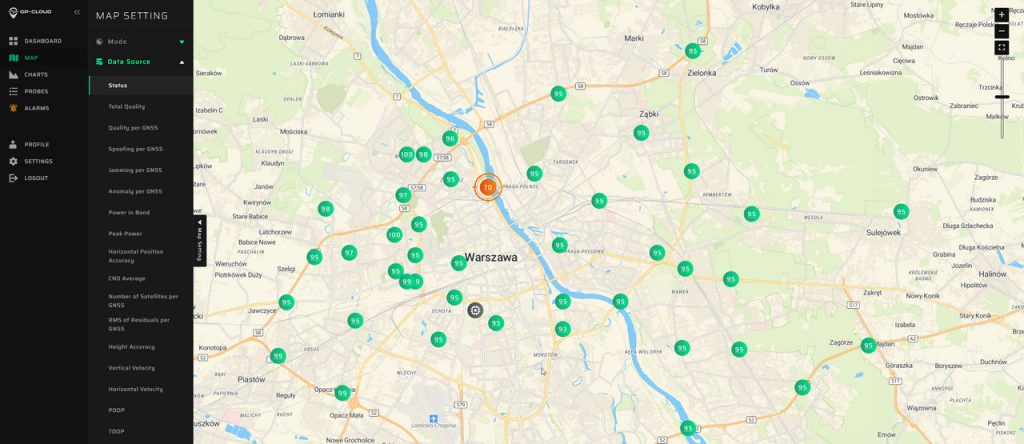
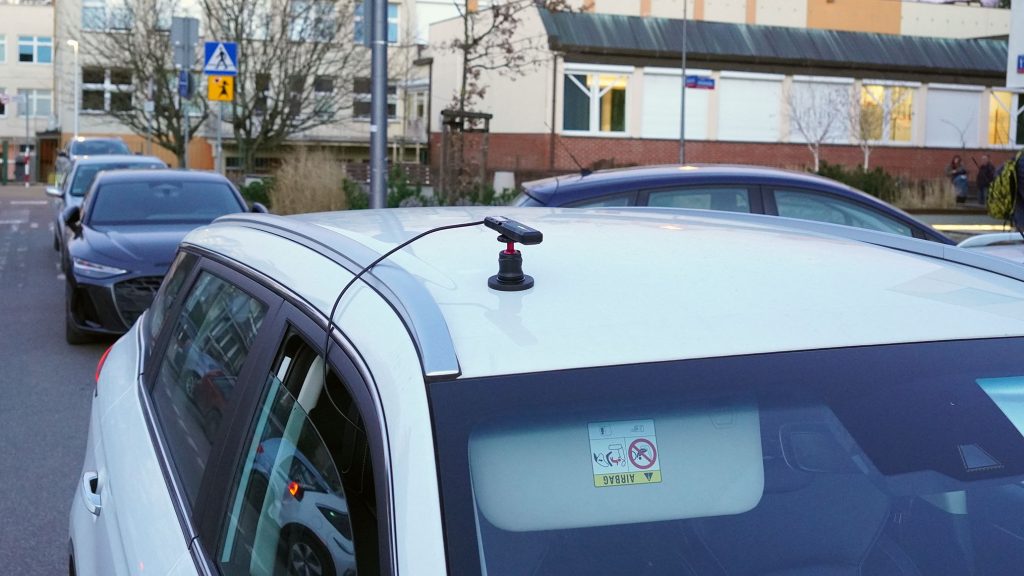
Through the GPSPATRON Connect app, field detections upload to GP-Cloud in real time. Multiple officers sharing a GP-Cloud workspace can collaborate on localization, triangulating a jammer’s position from multiple detection points across an aria.
Fixed Sensor Correlation
When combined with fixed GP-Probe DIN L1 sensors deployed at CCTV locations, field detections gain city-wide context. An officer’s Nano detection can be correlated with earlier fixed-sensor hits to trace a vehicle’s route, or to identify whether a vehicle is heading toward a known exit corridor.
Long-Term Intelligence
GP-Cloud archives all detection events with timestamps and geolocation. Over time, this creates an interference map revealing hotspots, repeat routes, and patterns associated with criminal networks. Forensic investigators can query historical data to support prosecution cases.



Read more: How GNSS jammer detection can be integrated with city CCTV systems to detect stolen vehicles
https://gpspatron.com/gnss-jammer-detection-cctv-stolen-vehicle-recovery/
Real-World Context: Documented Jammer Use in Vehicle Crimes
The threat is not theoretical. Recent documented cases illustrate the operational reality.
In a 2024 case reported by automotive media, a Toyota RAV4 stolen in west London was recovered within three hours despite the thieves deploying four separate GPS jammers simultaneously. The recovery was possible because the vehicle was equipped with a VHF-based tracker operating outside the jammers’ frequency range. However, most fleet and consumer GPS trackers lack this capability, making jammer detection the only practical countermeasure for conventional tracking systems.
In early 2025, Eurojust coordinated arrests across four European countries targeting a criminal network responsible for stealing over 100 luxury vehicles. Seized equipment included devices specifically designed to “jam and disrupt electronic signals,” confirming that jammers are standard operational equipment for organized theft rings.
A separate case documented a UK drug courier operating from an airfield with a sophisticated jammer system integrated into a suitcase, featuring eight antennas covering GPS, cellular, WiFi, Bluetooth, and vehicle recovery frequencies. This level of sophistication indicates that professional criminals treat jamming as essential operational security.
Technical Specifications at a Glance
Form Factor: Ultra-compact, pocket-sized
GNSS Band: L1 (GPS, GLONASS, Galileo, BeiDou)
Detection Range: Up to approximately 500 meters for standard low-cost jammers
Alert Methods: Vibration, sound, 36-LED power scale
Battery Life: 30 days (Detector Mode), 3 months (Logger Mode)
Connectivity: USB Type-C to Android (GPSPATRON Connect app)
Conclusion: Every Officer as a Detection Point
GPS jammers have given criminals an asymmetric advantage: the ability to neutralize tracking technology with a €30 device. But that advantage depends on the jammer remaining undetected.
The GP-Probe Nano L1 reverses this equation. By turning every patrol officer into a mobile jammer detection point, law enforcement can identify stolen vehicles that would otherwise pass unnoticed. The criminal’s tool of invisibility becomes a beacon.
Combined with fixed infrastructure sensors and GP-Cloud analytics, portable detection creates layered coverage, from city-wide networks to individual officer patrols. The result is not just faster vehicle recovery, but a systematic intelligence capability that maps criminal activity over time.
Interested in evaluating portable jammer detection for your patrol operations?
External Sources Referenced
– UK Government: Vehicle theft equipment to be banned under new government law – https://www.gov.uk/government/news/vehicle-theft-equipment-to-be-banned-under-new-government-law
– Eurojust: Coordinated action to arrest gang members stealing luxury cars across Europe – https://www.eurojust.europa.eu/news/coordinated-action-arrest-gang-members-stealing-over-one-hundred-luxury-cars-across-europe
– AM Online: Four GPS Jammers Fail: Tracker Recovers Stolen Toyota RAV4 in Just Three Hours – https://www.am-online.com/news/four-gps-jammers-fail-tracker-recovers-stolen-toyota-rav4-in-just-three-hours-ad-feature


