

Every day, organized criminal networks steal hundreds of vehicles across Europe. Their most effective weapon is not a master key or a hacking device: it is a GPS jammer that costs less than €30. Once activated, the vehicle vanishes from tracking platforms.
Recovery rates collapse. But here is the counterintuitive truth: that jammer is not making the vehicle invisible. It is broadcasting a detectable RF signal. With the right GNSS jamming detection system integrated into existing CCTV infrastructure, law enforcement can turn the criminal’s tool against them.
This article explores how cities can transform passive video surveillance into an active stolen vehicle recovery network by deploying GPS jammer detectors alongside existing cameras.
The Scale of Vehicle Theft in Europe
The numbers are stark. According to Eurostat and national police data, Europe experiences between 500,000 and 700,000 vehicle thefts annually. In the UK alone, over 132,000 vehicles were stolen in 2023, costing insurers more than £1.2 billion. Germany recorded 29,985 police-reported thefts, a 17.5% increase from 2022. France leads Europe with approximately 140,000 thefts per year.
But raw theft numbers only tell part of the story. The critical metric is recovery rate.
Without a functioning GPS tracker, recovery rates in Europe hover around 23-25%. With a properly installed tracker, that figure jumps to 90-95%. The difference is stark: the presence or absence of location data determines whether a vehicle is found within hours or disappears forever.
Professional thieves understand this calculus perfectly. That is why, according to law enforcement estimates cited by the UK Government, 80-85% of organized vehicle thefts now involve GPS jammers. The Metropolitan Police estimates that jammers are used in approximately 60% of vehicle thefts in London.
Why Criminals Use GPS Jammers, and Why That Creates an Opportunity
Professional criminals often use multi-band jammers that block not only GPS but also GSM, LTE, and WiFi signals, neutralizing even advanced trackers that use cellular or WiFi positioning as backup. However, GNSS frequencies are always targeted, as satellite navigation remains the primary positioning method for vehicle trackers. This article focuses on GNSS jamming detection, the common denominator across all organized vehicle theft operations. For less than €30, anyone can purchase a cigarette-lighter-powered jammer online that creates a jamming bubble extending 250-300 meters in every direction.
From the criminal’s perspective, the logic is straightforward: activate the jammer, and the vehicle’s GPS tracker stops transmitting. Fleet management platforms show the vehicle as stationary or offline. The owner receives no alerts. The stolen vehicle appears to have vanished.
But there is a fundamental flaw in this logic. A jammer does not create invisibility; it creates a signal. Every active jammer broadcasts RF energy across GNSS bands. That energy is detectable, measurable, and geolocatable. The criminal believes they are hiding. In reality, they are announcing their presence to anyone with the right sensor.

The CCTV Operator’s Dilemma: Too Much Data, Too Little Time
When a vehicle theft is reported, CCTV control centers face a formidable challenge. A typical city may have hundreds or thousands of cameras. The stolen vehicle could have traveled in any direction. License plates are frequently swapped or cloned: UK data shows plate theft increased by 18% between 2019 and 2022, with over 50,000 cases annually.
Operators must manually review footage from multiple cameras, looking for a vehicle that may appear identical to dozens of others on the road. The cognitive burden is immense.
Research on CCTV operator performance is sobering. Studies show that after just 12 minutes of continuous monitoring, operators begin missing up to 45% of on-screen activity. After 22 minutes, detection drops to as low as 5% effectiveness. Effective sustained attention lasts only 8-10 minutes before fatigue sets in.
Meanwhile, the clock is ticking. Within 30 minutes of a theft, a vehicle may already be inside a chop shop being dismantled for parts. Within 2-3 hours in the Schengen area, it can cross multiple borders. After 24-48 hours, it may reach export ports bound for Africa or the Middle East. After 30 days, only 2% of stolen vehicles are ever recovered.
The first hour after a theft report, often called the “golden hour,” is decisive. But operators cannot possibly review city-wide footage fast enough to capitalize on it.

The Solution: Event-Driven CCTV Filtering Using GNSS Jammer Detection
The breakthrough is conceptually simple: instead of searching for the stolen vehicle, search for the jamming event.
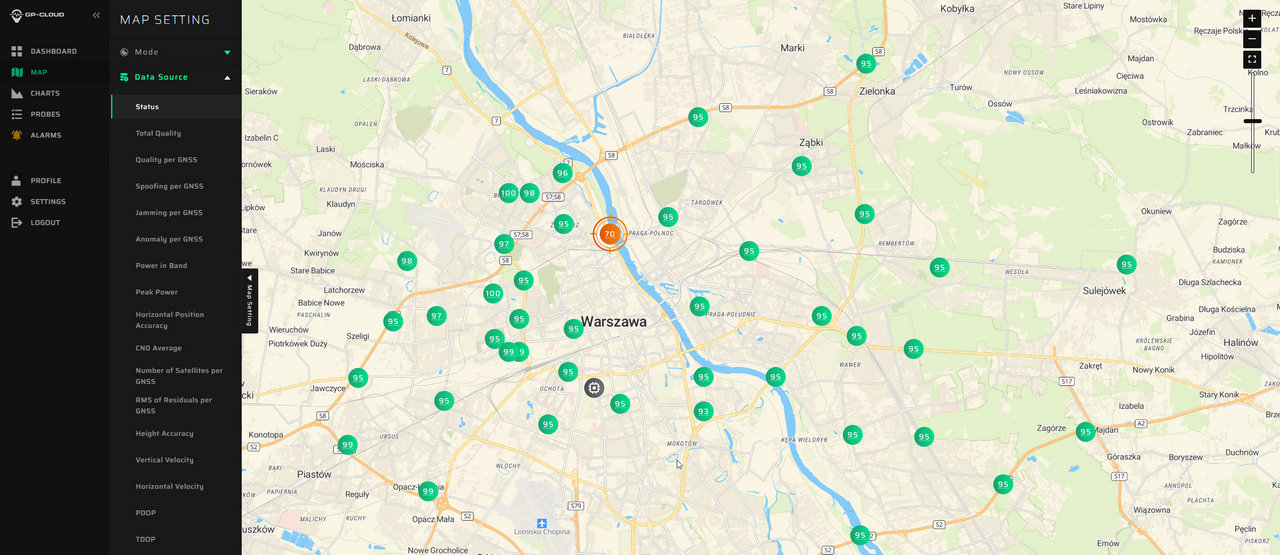
By deploying compact GPS jammer detectors alongside existing CCTV cameras, cities can create a network that automatically flags interference events with precise timestamps and locations. When a theft is reported, operators no longer need to review hours of footage from dozens of cameras. They can immediately narrow their search to the specific cameras that recorded a jamming event near the time and location of the theft.
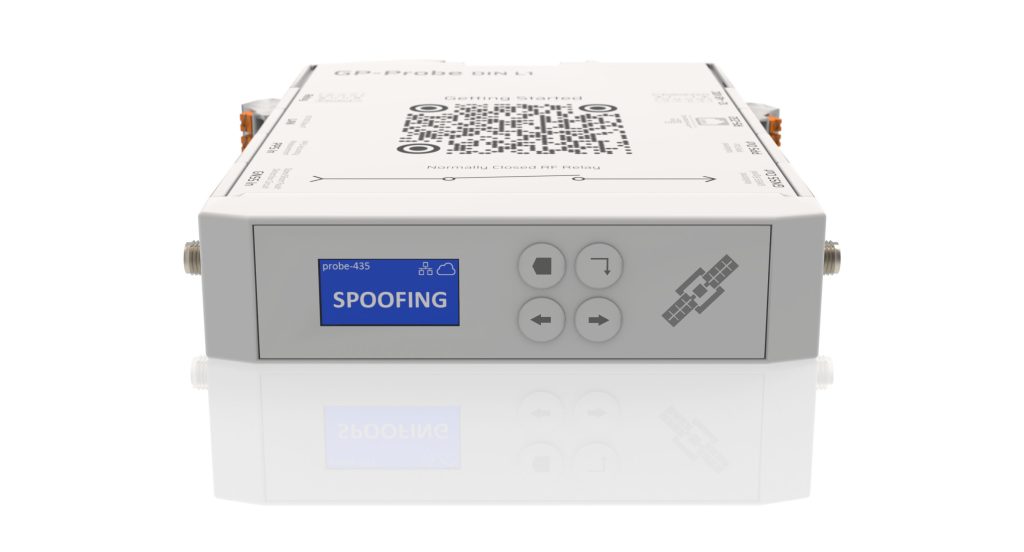
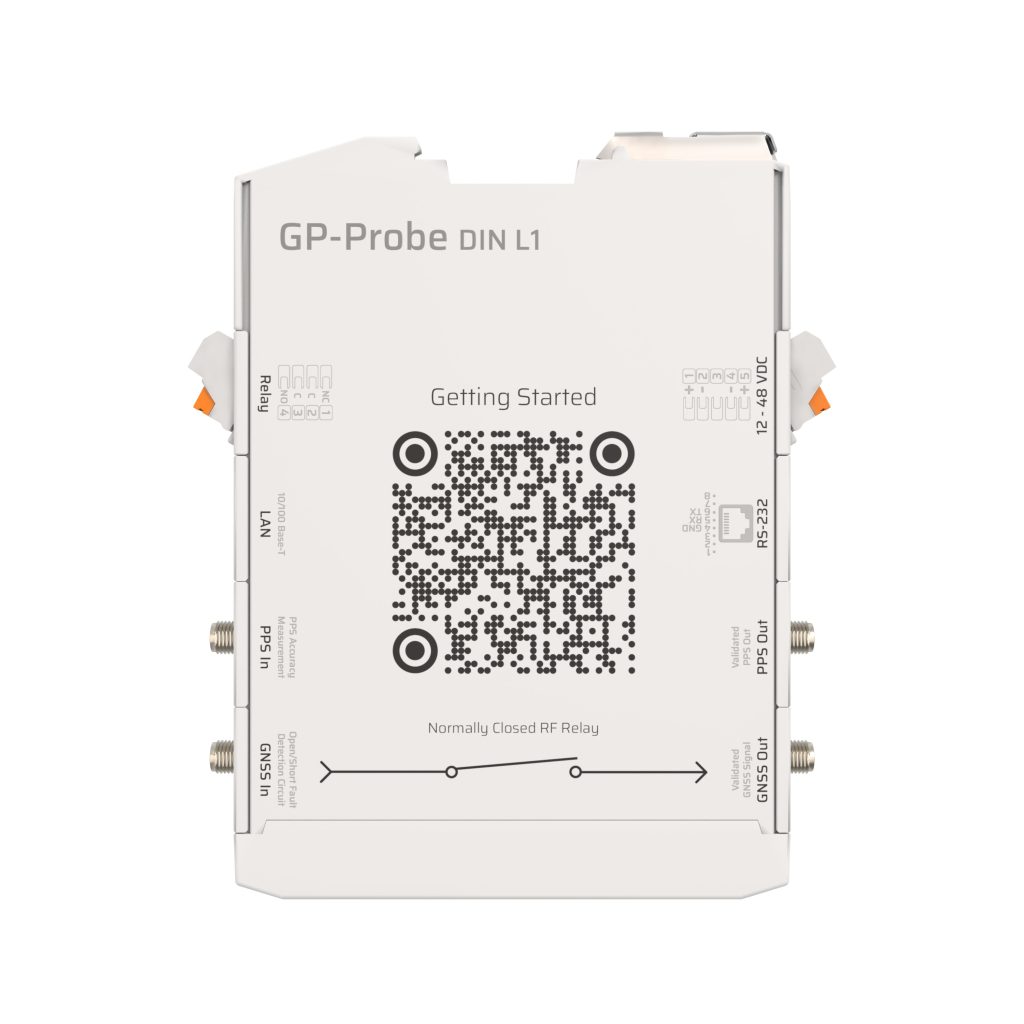
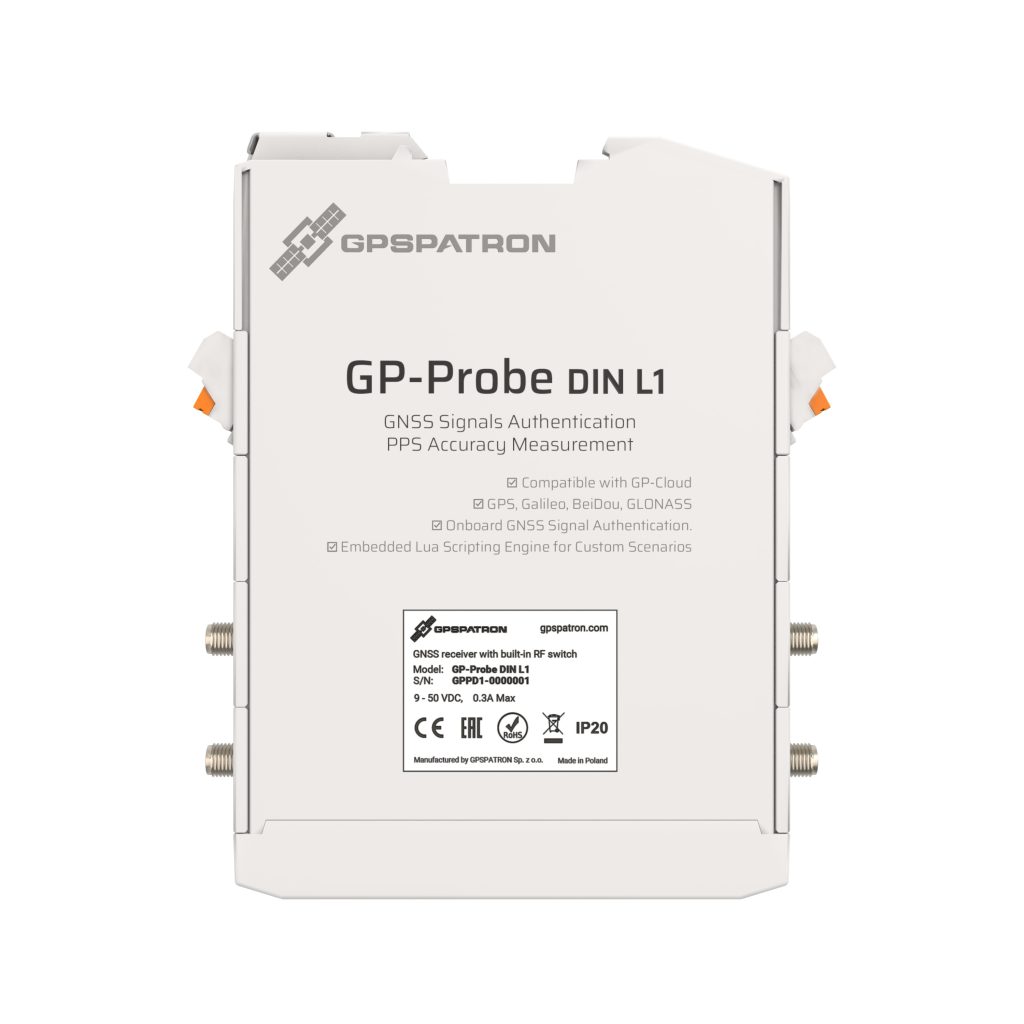
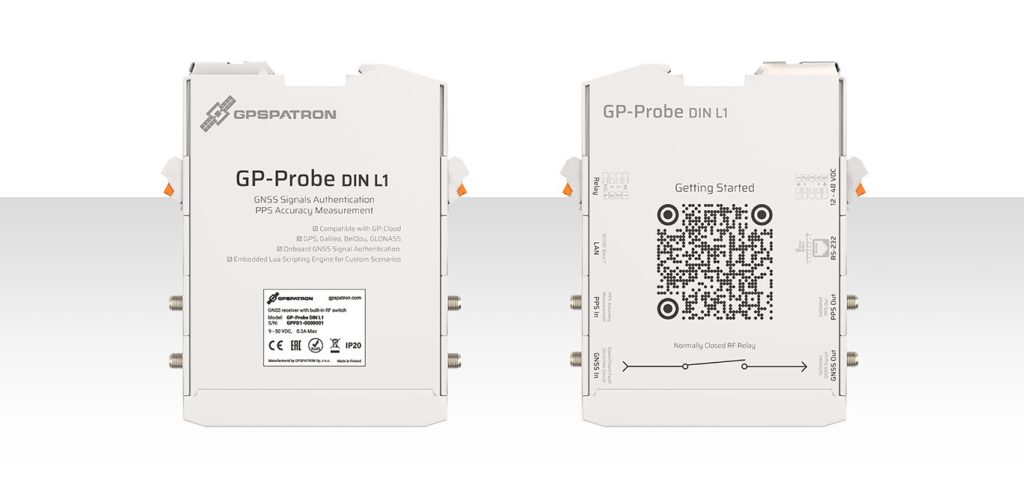
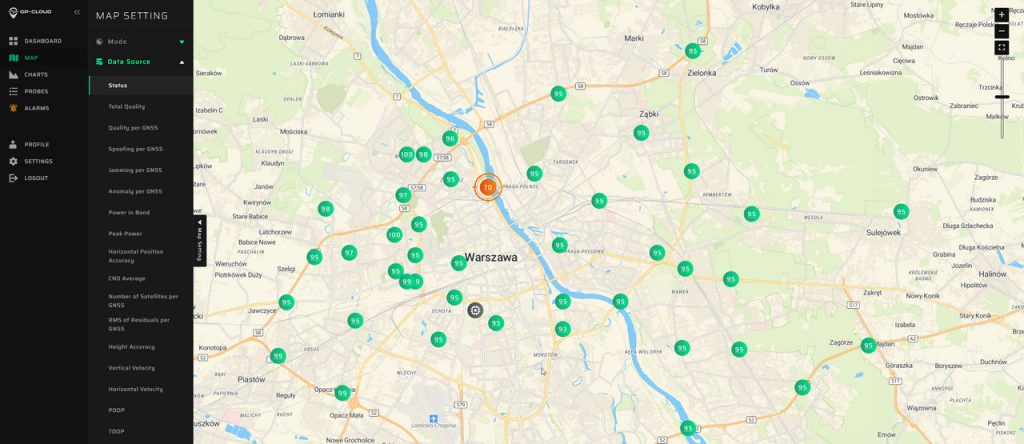
The GP-Probe DIN L1, designed specifically for infrastructure deployment, fits standard 35mm DIN rails used in electrical cabinets worldwide. It monitors the GNSS L1 band (covering GPS, GLONASS, Galileo, and BeiDou signals) and logs every interference event with timestamp and measured power level. Data streams to GP-Cloud, a centralized monitoring platform that correlates events across an entire sensor network.
The result is a dramatic reduction in investigative workload. Instead of reviewing footage from 50 cameras, an operator might examine clips from 2 or 3: those positioned near the sensors that detected jamming activity around the time of the theft.







Operational Scenario: From Theft Report to Vehicle Identification in Minutes
Consider a realistic scenario in a mid-sized European city with GP-Probe sensors deployed at 40 key intersections alongside CCTV cameras.
14:12 – Theft Reported
A luxury SUV owner reports their vehicle stolen from a shopping center parking lot. The owner’s app shows the GPS tracker went offline at approximately 14:05.
14:14 – GP-Cloud Query
The control room operator queries GP-Cloud for jamming events between 14:00 and 14:15 within 3 km of the shopping center. The system returns three events, including a strong detection at Sensor #23 (intersection of Main Street and Park Avenue) at 14:08.
14:16 – Footage Review
The operator pulls footage from CCTV cameras covering that intersection, focusing on 14:07-14:10. Within 90 seconds, they identify a dark gray SUV matching the victim’s description passing through at 14:08:24.
14:19 – Route Tracing
Using adjacent cameras and additional sensor hits (Sensor #31 at 14:11, Sensor #42 at 14:15), the operator traces the vehicle’s route heading northeast toward the industrial district.
14:22 – Patrol Dispatch
Patrol units are dispatched to the industrial district with visual confirmation of the vehicle and its last known trajectory, all within 10 minutes of the initial report.
Total time from theft report to actionable intelligence: approximately 10 minutes. Without jammer detection, the same investigation might take hours, if it succeeds at all.






Deployment: Low Cost, Existing Infrastructure
One of the most significant advantages of this approach is that it leverages infrastructure cities already have.
Hardware Requirements
The GP-Probe DIN L1 is designed for mass deployment. It mounts on standard 35mm DIN rails found in traffic signal cabinets and CCTV junction boxes. Power can be drawn from existing infrastructure (12-24V DC). Connectivity options include 4G cellular, Ethernet, or RS232 for integration with legacy systems.
No New Cameras Needed
Cities do not need to deploy additional cameras. The sensors simply add an intelligence layer to existing CCTV networks. A sensor detects a jamming event; the timestamp correlates with footage already being recorded by nearby cameras.
Centralized Monitoring
GP-Cloud aggregates data from all deployed sensors in real time. Detection latency is under 3 seconds. The platform offers a REST API for integration with existing video management systems (VMS) and command center workflows. Alerts can be configured to trigger automatically based on interference power thresholds or geographic zones.
Scalability
The system scales from a handful of sensors in a single district to thousands across a metropolitan area. GP-Cloud is available as a SaaS platform for rapid deployment or as an on-premise installation for organizations with specific data sovereignty requirements.

Beyond Vehicle Theft: Additional Operational Benefits
While stolen vehicle recovery is the most immediate application, a deployed jammer detection network provides additional intelligence capabilities.
Pattern Analysis
Over time, GP-Cloud reveals jamming hotspots and repeat routes used by criminal networks. This data can inform patrol deployment, camera placement, and targeted enforcement operations.
Cargo and Fleet Security
Commercial cargo theft in Europe costs businesses an estimated €8.2 billion annually. Jammers are standard equipment for hijacking operations. Fixed sensor networks can detect cargo vehicles under attack as they pass through monitored corridors.
Critical Infrastructure Protection
GPS jamming does not just affect vehicle tracking. It disrupts timing systems, telecommunications infrastructure, and emergency services. The UK’s Project Sentinel study detected 50-450 jamming incidents per day with only 20 sensors. Fixed detection networks protect broader urban infrastructure beyond vehicle recovery.
Regulatory Momentum: The UK Crime and Policing Bill 2025
The legislative environment is shifting. Jammer use is already illegal in the UK under the Wireless Telegraphy Act 2006. The Crime and Policing Bill, introduced in February 2025, goes further by criminalizing possession, importation, and supply of GPS jammers, with specific provisions targeting vehicle theft. Maximum penalties would increase to 5 years imprisonment, and the burden of proof would be reversed: individuals found with jammers would face prosecution, as civilian use has no legitimate purpose.
Similar discussions are underway across Europe. France already prohibits possession of jammers under telecommunications law (CPCE L.33-3-1), with penalties of up to 6 months imprisonment and €30,000 fines.
As enforcement intensifies, detection capabilities become increasingly valuable, both for identifying vehicles in use during crimes and for building evidence cases against organized networks.
Extending Coverage: Field-Level Detection for Patrol Units
Fixed infrastructure sensors cover monitored intersections and corridors. But what about patrol officers in the field? For tactical law enforcement applications (roadside checkpoints, parking garage sweeps, residential patrols), portable detection offers a complementary capability. The GP-Probe Nano L1 is a pocket-sized detector that alerts officers via vibration, sound, and LED indicators when a jammer-equipped vehicle passes nearby. Combined with fixed DIN sensors feeding GP-Cloud, field detections gain city-wide context.
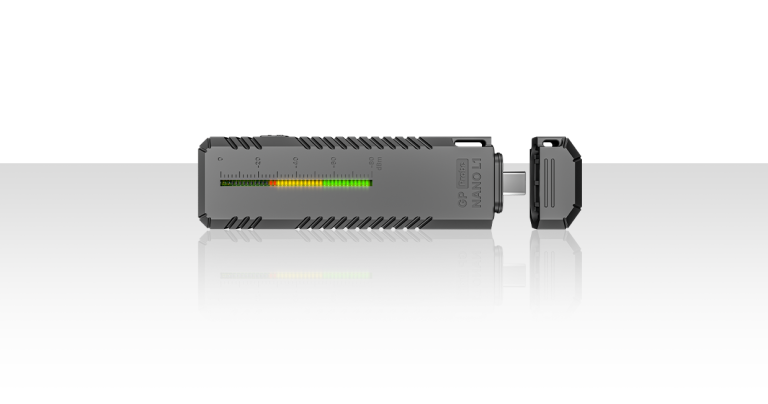
Ultra-compact wearable GNSS jamming detector for field use and source localization.
Conclusion: The Missing Intelligence Layer
Cities have invested heavily in CCTV infrastructure. Cameras are everywhere. What they lack is an efficient trigger: a way to cut through the noise and direct operators to the footage that matters.
GPS jammer detection provides that trigger. By treating interference not as a problem but as a signal, law enforcement can turn the criminal’s own tool into a liability. The same device that makes a vehicle invisible to tracking makes it visible to detection.
The GP-Probe DIN L1, deployed alongside existing cameras and connected through GP-Cloud, adds a missing intelligence layer to urban security infrastructure, transforming passive surveillance into active investigation support.
Ready to explore how GNSS jammer detection can enhance your city’s CCTV network? Contact GPSPATRON for a technical consultation or request a demonstration of GP-Cloud’s capabilities.
External Sources Referenced
– UK Government: Vehicle theft equipment to be banned under new government law – https://www.gov.uk/government/news/vehicle-theft-equipment-to-be-banned-under-new-government-law
– GDV (German Insurance Association): Car Theft Report 2024 – https://www.gdv.de/gdv-en/media/car-theft-report-2024-insurers-pay-over-290-million-euros-for-stolen-cars-192830
– Eurojust: Coordinated action to arrest gang members stealing over one hundred luxury cars across Europe – https://www.eurojust.europa.eu/news/coordinated-action-arrest-gang-members-stealing-over-one-hundred-luxury-cars-across-europe
Enter your details and we will send the download link to your email.


