

Introduction
A major upgrade has arrived for all GPSPATRON users operating in maritime environments. We are excited to announce the release of our new Vessel algorithms — a dedicated processing mode designed specifically for ships, ports, coastal monitoring sites, and offshore infrastructure.
These algorithms are now available across the entire GPSPATRON ecosystem:
- As cloud-based algorithms in GP-Cloud for GP-Probe TGE2 and GP-Probe DIN L1
- As onboard OSP (Onboard Signal Processing) algorithms inside the GP-Probe DIN L1
This marks a significant step forward in helping maritime operators detect and analyze GNSS interference more reliably than ever before.
Why Maritime GNSS Interference Detection Matters
GNSS interference at sea is no longer a rare or exceptional event — it has become a daily operational challenge in many maritime regions. Unlike land-based environments, ships operate in open water, making them highly exposed to jamming and spoofing. Interference can originate from nearby vessels, coastal electronic warfare activity, or even low-cost personal jammers carried by crew or passengers.
For the maritime industry, these disruptions are far more than a technical inconvenience. GNSS reliability directly affects:
- Safe navigation and route planning
- Automatic Identification System (AIS) reporting accuracy
- Port approaches and maneuvering in restricted waters
- Offshore operations, including wind farms and drilling platforms
- Time synchronization for onboard IT and communication systems
- Situational awareness and collision avoidance during reduced visibility
As GNSS becomes increasingly central to maritime autonomy, electronic chart systems, and fleet management, even short interference events can lead to route deviations, operational delays, or safety risks.
This is why reliable detection — and clear, actionable interpretation — of GNSS interference at sea is essential. Accurate monitoring helps crews maintain awareness of navigation integrity, allows ports and coastal authorities to identify threats early, and provides operators with data needed to investigate incidents or respond to jamming attempts.
In an environment where interference can appear suddenly and propagate far across open water, specialized maritime detection capabilities are no longer optional — they are mission-critical.
Vessel Algorithms Now Available in GP-Cloud (TGE2 + DIN L1)
The cloud version of Vessel mode is now live in GP-Cloud, enabling maritime monitoring with both TGE2 and DIN L1 sensors.
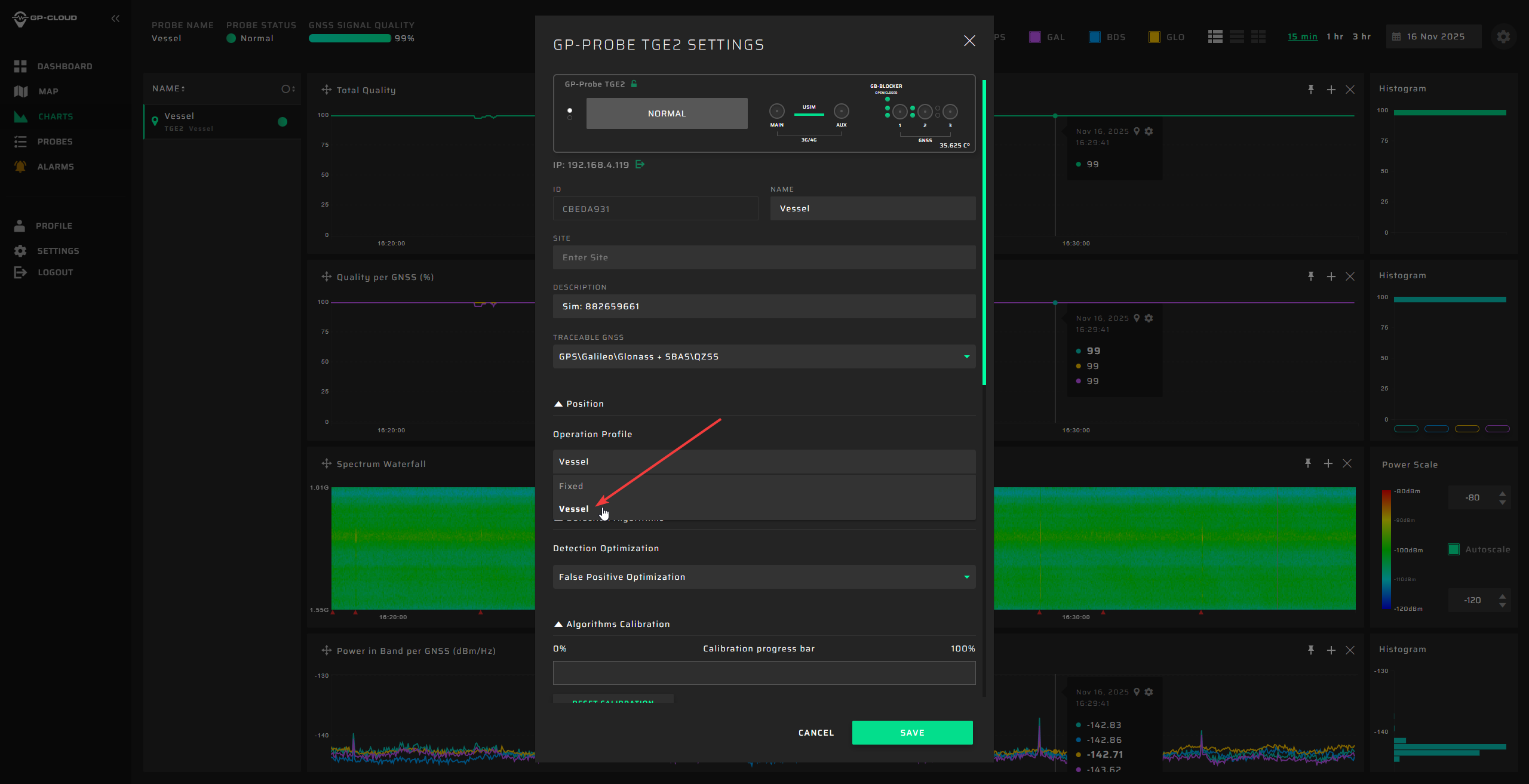
Cloud-based Vessel processing includes:
- Centralized analysis of maritime interference events
- Scalable processing for fleet and port monitoring
- Unified detection logic across multiple sensors
- Automatic identification of interference affecting moving ships
- Compatibility with API v3 for downstream integrations
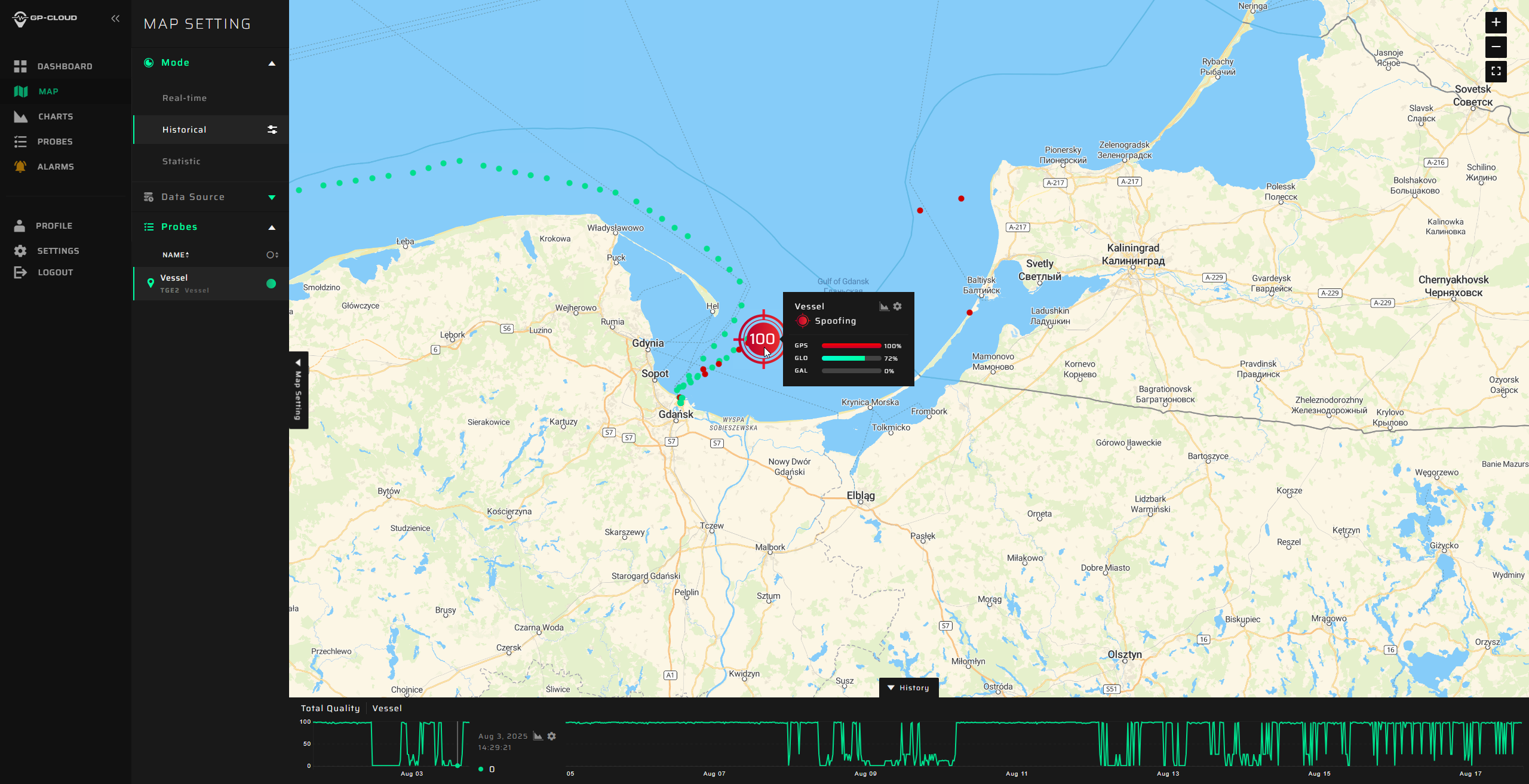
This unlocks powerful new maritime use cases:
- Fleet GNSS integrity monitoring
- Coastal jamming analysis
- Port security
- Offshore wind farm GNSS protection
- Real-time monitoring for naval and coast guard vessels
Vessel Algorithms Added to DIN L1 Onboard Signal Processing (OSP)
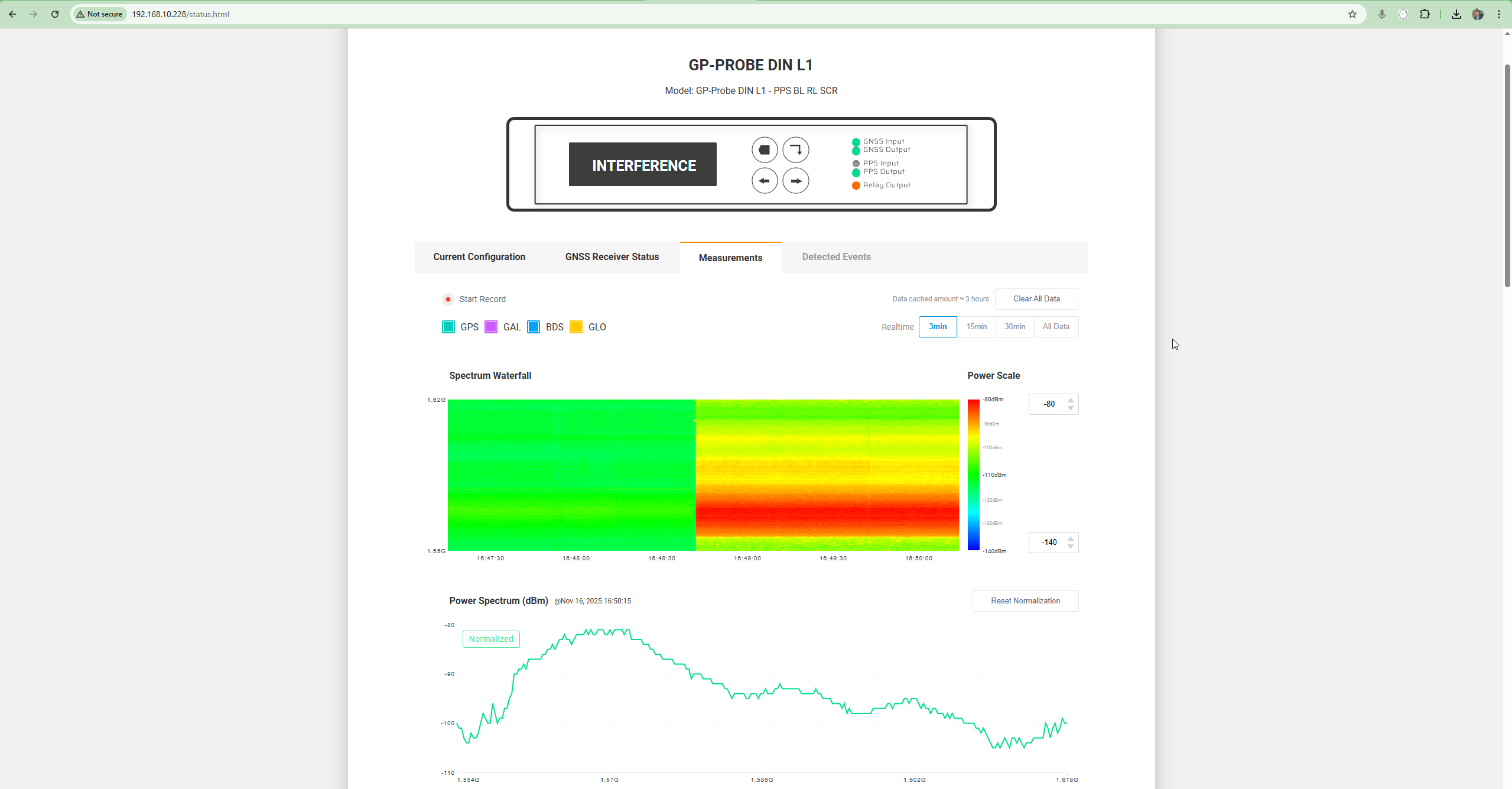
In addition to cloud processing, the same algorithms are now available inside the device, running locally on the GP-Probe DIN L1. This gives maritime users full autonomy when operating without internet — critical for vessels outside coastal coverage or in restricted environments.
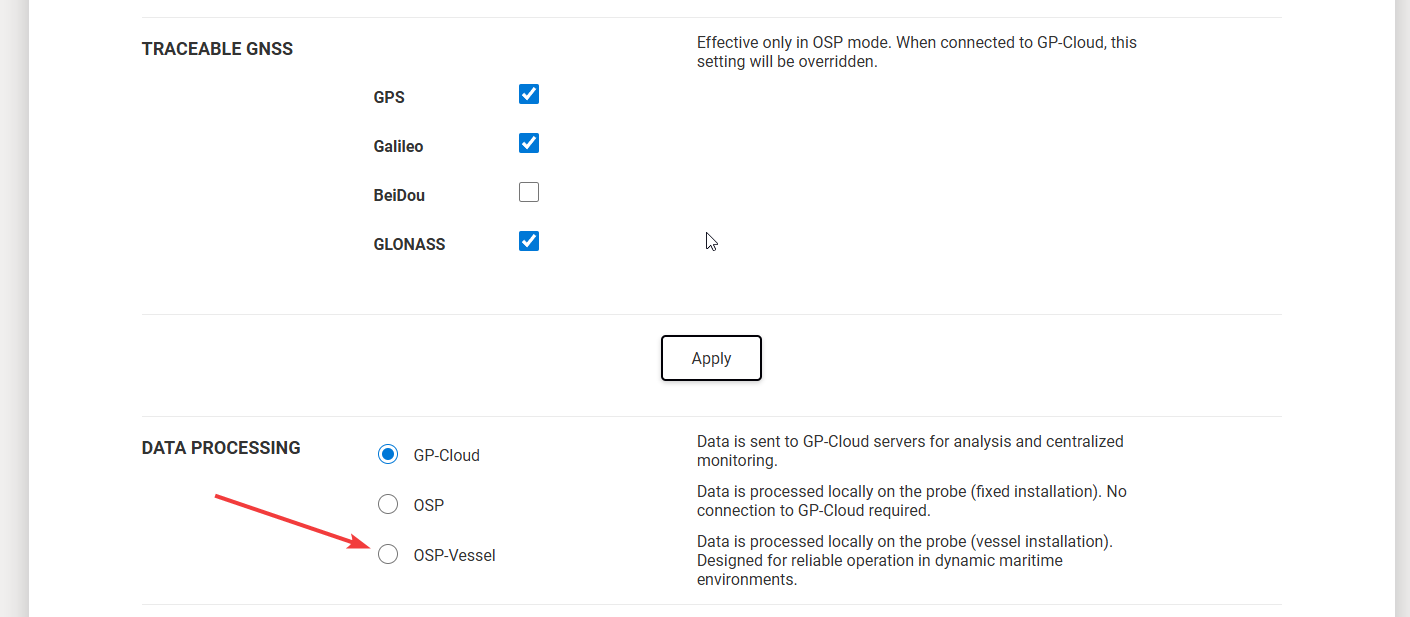
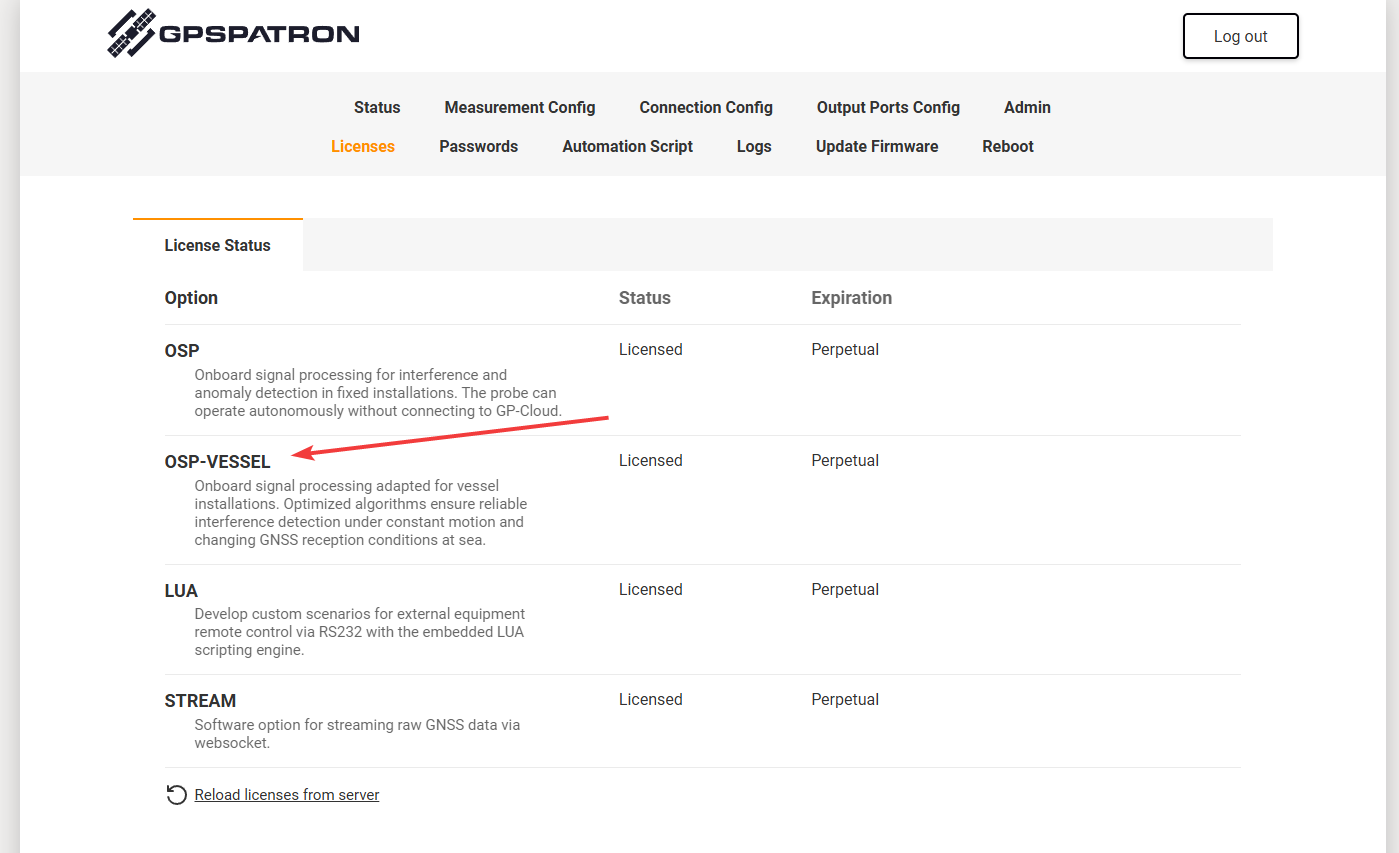
OSP Vessel mode provides:
- Real-time onboard detection of GNSS jamming/spoofing
- Stable and motion-aware anomaly detection
- Zero dependency on cloud connectivity
- Immediate reaction via relay/LUA scripting/SNMP
- Local event storage and logging for later analysis
This ensures reliable interference detection even in isolated or high-security maritime operations.
How to Access the Vessel Algorithms
The new Vessel processing mode is already available in GP-Cloud, and all customers can enable it directly in the probe settings for both GP-Probe TGE2 and GP-Probe DIN L1.
To use the onboard Vessel detection algorithms on the GP-Probe DIN L1, you will need to:
- Update the firmware to the latest version
- Activate the required license for onboard Vessel processing
Firmware updates are delivered exclusively through our centralized repository: https://firmware.gp-cloud.io/
This ensures that all devices run verified, secure, and up-to-date software aligned with our latest detection capabilities.
For Maritime Operators and Crew — We're Here to Help
If you are a ship operator, fleet manager, captain, or crew member and have questions about GNSS interference at sea — how to detect it, how to respond, or how to integrate our Vessel mode into your operations — we invite you to reach out. Our team will help you understand the risks, choose the right configuration, and build a reliable GNSS protection workflow for your vessel or fleet.
Fill out the contact form and we will get back to you shortly.


